Dipole antennas are considered the 'ideal' omnidirectional antenna. See the formulas so you can build your own.
Dipole antennas are considered the “ideal” omnidirectional antenna and are what all other antennas are compared against. They’re also one of the easiest antennas to construct. The downside is mounting them as they’re extremely big and need be placed high above the ground for lower bands, and the feedpoint is in the middle which makes some installations awkward.
Note: For all formulas, length is in feet and frequency is in MHz.
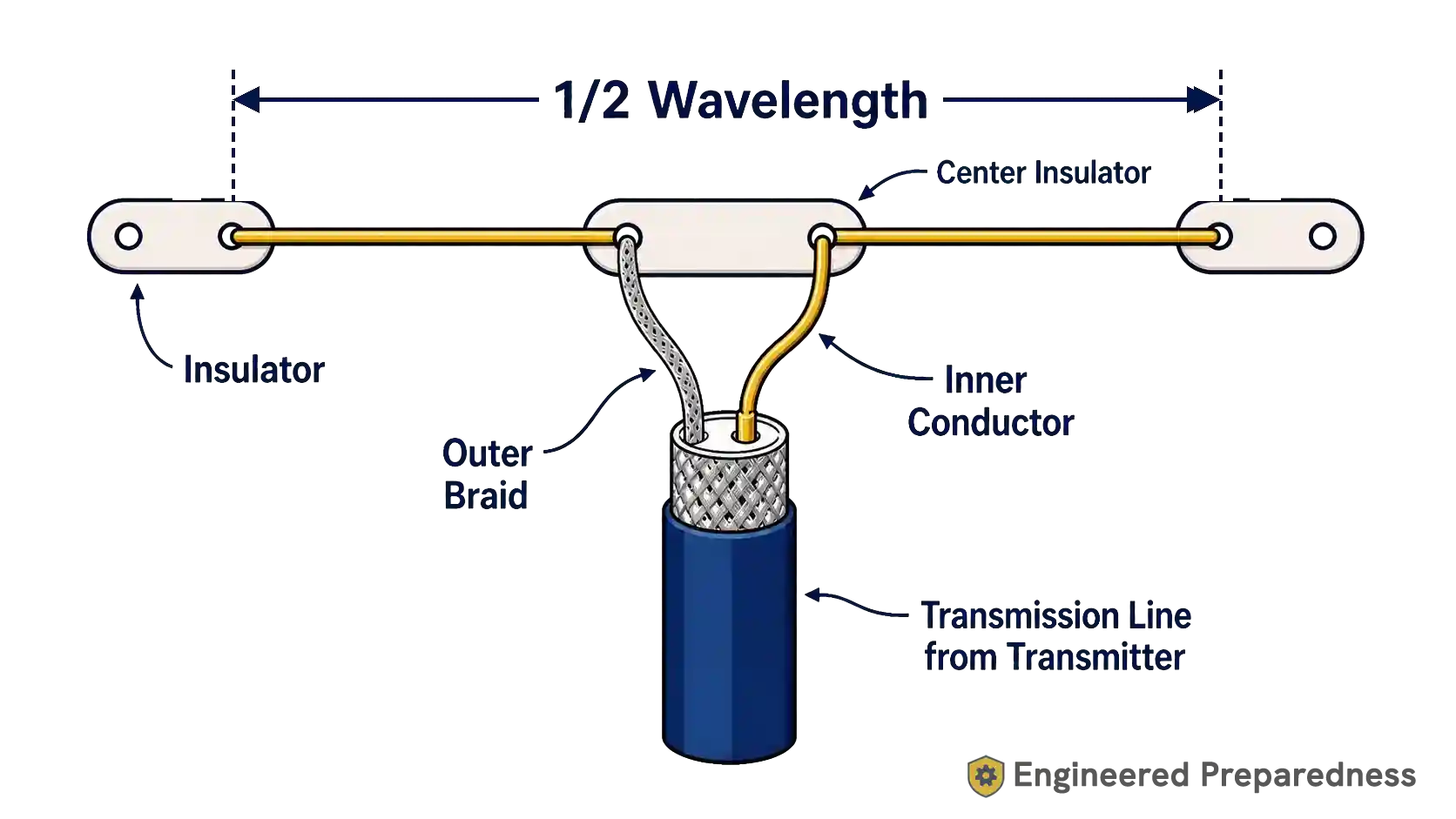
Antenna Length = 468 / frequency Element Length = 234 / frequency
For normal distance communication, antenna should be placed at approximately 60% of the wavelength off the ground.
For NVIS, antenna should be placed at approximately >25% of the wavelength above the ground.
If needed, a dipole can be installed in either a “vee” or “inverted vee” configuration. When doing this, the elements will normally need to be 2-5% longer to get a proper SWR match.
When being fed with coax cable instead of twin-lead transmission line, dipole antennas can be further enhanced with the addition of a small 1:1 transformer (balun) between the coax and the antenna wire elements. This transformer eliminates/prevents stray currents that can negatively affect performance, or even potentially damage a radio. This is especially at low power levels (QRP).
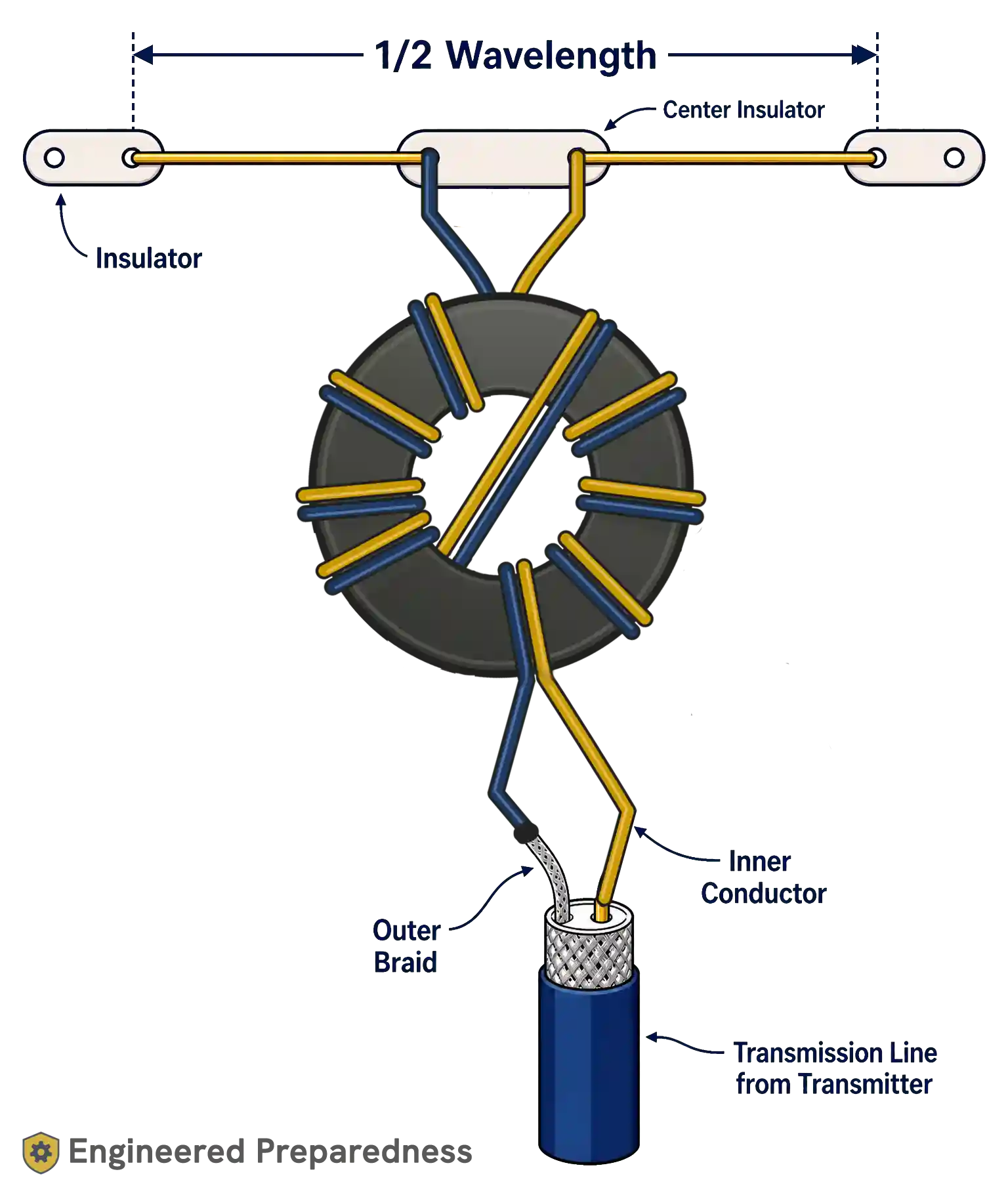
This transformer is normally made by winding two parallel wires 10-12 turns around a 43 or 61-mix toroid as shown.
