Threats  /  Fuel Shortage

Fuel Shortage

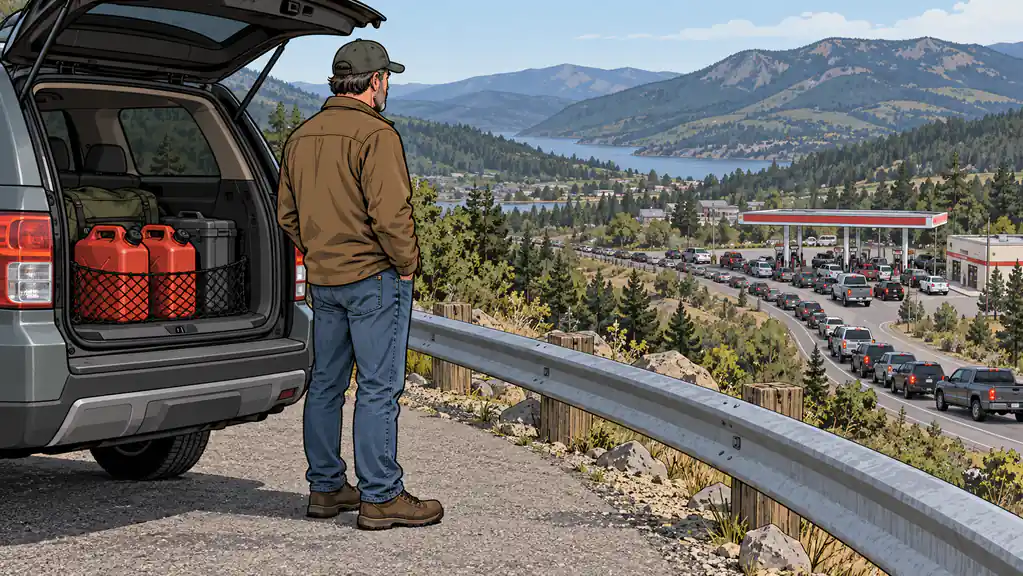
Pipelines and supply chains hiccup. The never-below-half-a-tank habit that quietly solves most of it.
ScopeRegionalCauseInfrastructureDriven bySystemicImpactMinorLikelihoodPossible
Fuel Shortage
Why it matters

What Fuel Shortage would mean for you

Three numbers decide how important Fuel Shortage is to your preparedness planning. Impact and Likelihood are general baselines. Vulnerability depends on how prepared you are for this threat.

ImpactMinor4/9
NegligibleCatastrophic

A shortage strains mobility and prices but is an inconvenience for a household that planned ahead - a low Impact the half-tank habit largely solves.

LikelihoodPossible5/9
RareFrequent

Periodic and regional, tied to pipeline issues, panic-buying, or supply shocks, so it's a possible recurring event.

VulnerabilityNot rated
NegligibleCatastrophic

This number is yours. It measures how hard Fuel Shortage would actually hit your household given what you already have in place. Rate it in Threat Planning — then all three multiply into your personal threat rating.

Rate it in Threat Planning →

General baselines — How we rate threats →

Be ready

Preparing for Fuel Shortage

Concrete moves that lower your Vulnerability. Add any of them and we'll track it as an action on your threat list.

Add to my threat list
Keep your tank above half as a standing habit.
Store fuel safely if you rely on a generator.
Have a plan to reduce trips and combine errands.
Keep alternate transport options in mind.
Learn more

Articles on Fuel Shortage

See it on the map

Fuel Shortage where you live.

Refineries and fuel supply, and how far you are from them.

Loading the map…
Lower
Higher

A national view — this is one of 410+ layers in Area Recon. Open it to zoom to your address, then add the hazards, infrastructure, terrain and resources around you, and read the real numbers for your county.

Explore in Area Recon →
Act on it

Tools for Fuel Shortage

Make Fuel Shortage part of your plan

Add it to your personal threat list, score it for your own household, or pull the real hazard data for your county.