


Most preparedness lists obsess over food and water and skip the thing that actually kills people first when the system stutters: the prescription that ran out. A diabetic without insulin, a heart patient without their blood-pressure medication, someone with a seizure disorder off their meds — these are the quiet emergencies that don’t wait for a hurricane. A three-day pharmacy closure, a supply-chain hiccup, an evacuation that leaves the pill bottles on the counter, and the “emergency” is already here.
The good news: building a cushion is legal, simple, and doesn’t involve a single gray-market pill.
Bank a week at a time
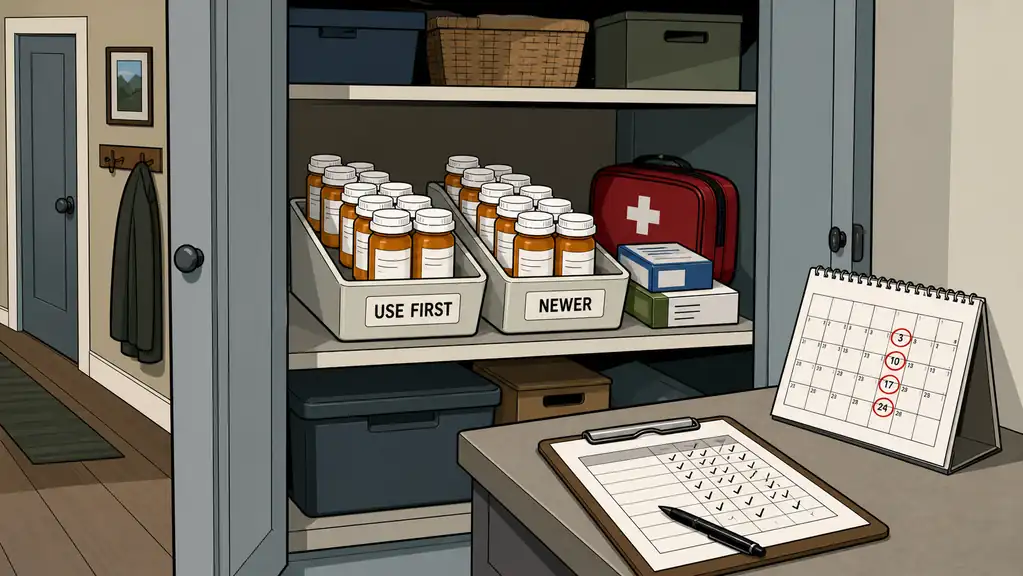
The trick isn’t buying extra — it’s refilling early. Fill each prescription on the earliest day your plan allows, every single cycle. Most insurance lets you refill a 90-day script around a week before you run out. Do that consistently and you quietly bank about a week of medicine every quarter. Left alone, that compounds into roughly a month of extra buffer each year — faster if your plan allows 100-day fills, or if you split the early-refill window on shorter scripts.
No hoarding, no rationing, no lying to a pharmacist. You’re simply never letting the buffer erode.
Talk to your prescriber
Say the word “emergency supply” to your doctor and you’ll often get help — many will write a one-time larger fill or a vacation override so you can jump-start the cushion instead of grinding it out a week at a time. If you take something critical, this conversation is worth having before you need it, not during.
Rotate, and store it right
A buffer is only good if it’s still good. Use the oldest bottle first so nothing dies in the back of the cabinet, and keep everything cool, dark, and dry — heat and humidity degrade medicine far faster than the printed date does. The bathroom, ironically, is the worst place for it.
Most tablets stay effective well past their expiration date. But some genuinely don’t, and these are the ones you must never stretch:
- Insulin
- Nitroglycerin
- EpiPens (epinephrine)
- Liquid antibiotics (reconstituted suspensions)
- Tetracycline antibiotics
For those, the printed date is a real deadline. For most everything else, the date is closer to a suggestion — but that’s a judgment call to make with your prescriber, not a website.
Don’t forget the over-the-counter half
The prescriptions get the attention, but a stocked shelf of the basics — pain and fever reducers, an antihistamine, anti-diarrheal, oral rehydration salts, a real first-aid kit — is what carries a household through the ordinary illnesses and injuries that don’t stop just because the pharmacy is closed. Size it to your family and the number of days you want to cover, and track it alongside your prescriptions so you actually notice when something’s low or expired.
That tracking is what turns a good intention into a real buffer — log your medications, OTC supplies, and first-aid gear with their expiry dates in the Medical & Hygiene inventory, and rotate against it.
This is planning guidance, not medical advice. Talk to your prescriber and pharmacist about building an emergency supply and about which of your medications can and can’t be stored long-term.