


Every preparedness list measures the body: calories per person per day, gallons of water, rounds of ammunition, gallons of fuel. All of it real, all of it necessary. And all of it aimed at keeping a person alive — while quietly assuming the person still wants to be there, doing the work, holding the line, on day forty of something grim. That assumption is the weak point.
People are built to protect their normalcy. This is the core of how humans behave under stress — we cling to our routines, and losing them is its own kind of injury. A prep that keeps you fed and freezing in the dark with nothing familiar left is a prep that’s keeping a miserable, brittle version of you alive. Morale is a supply. It just never gets a shelf.
The thing that makes people quit isn’t hunger
Acute danger gets the attention, but long emergencies aren’t won or lost in the first hour. They grind. What breaks people over weeks and months isn’t usually a lack of calories — it’s the relentless sameness, the fear, the boredom, the loss of every small thing that used to mark a normal day — the normal life that they have lost. A person whose morale is gone makes bad decisions, stops maintaining discipline, and eventually stops trying.
You can be fully stocked on everything that keeps a body alive and still lose the person running it.
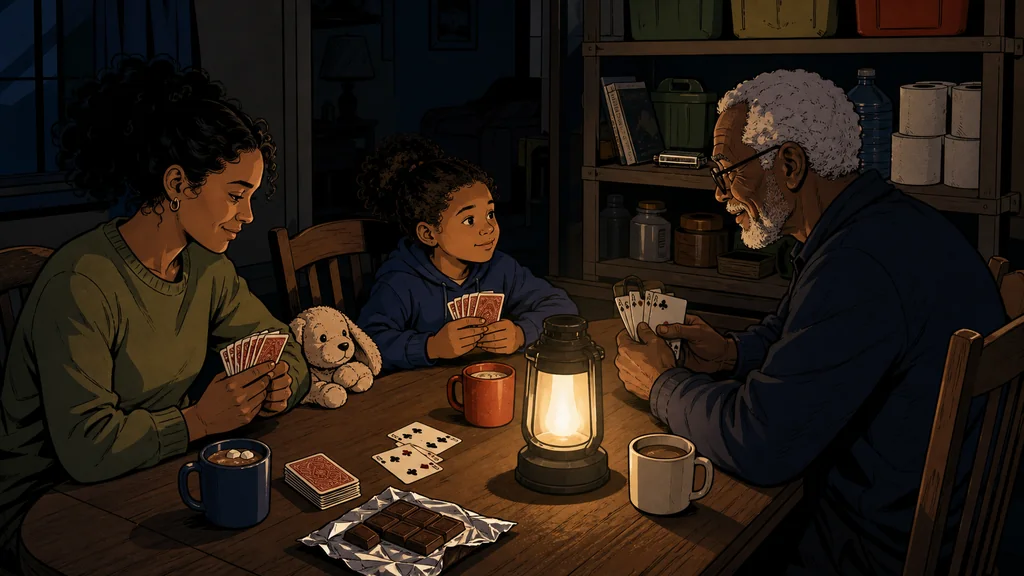
The fix is almost insultingly cheap, which is exactly why it gets skipped. A pound of good coffee. A bar of real chocolate. A deck of cards, a few paperbacks, a harmonica, dice. The kids’ favorite candy. A familiar spice that makes the hundredth bowl of rice taste like a meal instead of a ration. None of it shows up on a survival calculator — and all of it is a small, deliberate hedge against the day someone in your household is done.
Comfort scales harder with dependents
If there are children in your plan, morale isn’t a luxury line — it’s load-bearing. A frightened kid with no routine, no comfort object, and nothing to do is a genuine problem for the whole group. A few familiar toys, a stuffed animal, coloring books, a favorite snack — these do real work holding a small person together, which holds the adults together, which holds the plan together. The same logic runs for anyone whose day is anchored by a routine — the elderly especially.
The overlap with barter is not an accident
Here’s the tell that comfort items matter: they’re exactly what people trade for when the stores are empty. Survivor accounts of long crises repeatedly list small comforts — coffee, chocolate, tobacco, alcohol, sweets — among the first things to vanish and the most valuable things to have. The items that disappear first aren’t all hard gear; a lot of the list is comfort. What people crave, they’ll trade for.
So a modest morale stock does double duty: it holds your own people together, and the surplus becomes some of the most tradeable goods you own.
Stock it on purpose, not by accident
The mistake isn’t disagreeing with any of this — most people nod along. The mistake is never deciding to stock morale, so it never happens. Treat it like any other category:
- Per person, name a few comforts that person actually cares about — not generic “treats,” the specific coffee, the specific candy, the specific hobby.
- Buy the shelf-stable ones deep and rotate them. Coffee, chocolate, hard candy, playing cards, and books don’t spoil on any human timescale you’re planning for.
- Give it a line in the inventory so it’s a real prep, not an afterthought you feel guilty about.
Bottom Line
- Morale is a supply. Long emergencies are lost to erosion, not just to hunger — and a person who’s done is a liability no matter how full the pantry is.
- It’s cheap and it’s specific. Coffee, chocolate, cards, books, a familiar spice, the kid’s comfort object — name the actual items, per person.
- Comfort is load-bearing with dependents. Routine and familiarity keep children and the elderly steady, which keeps everyone steady.
- The surplus is premium barter. What people crave, they trade for. Stock morale on purpose and give it a shelf.
Add a small, named morale stock to your Personal Items inventory — it counts as a real prep.