


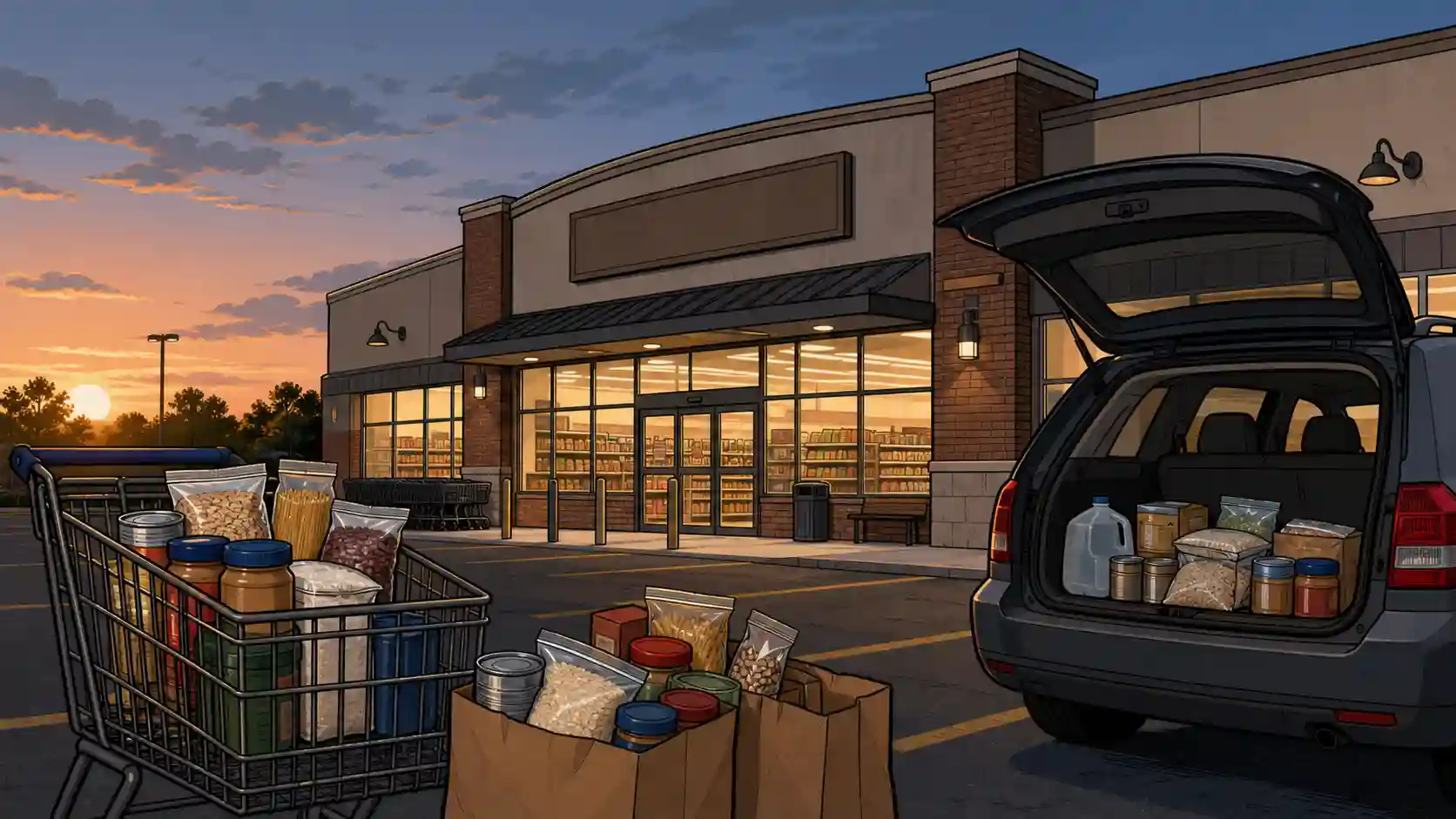
The fastest way to make food storage fail is to treat it as a separate, exotic project — a wall of buckets you’ll never open, bought once and forgotten. The durable way is the opposite: build a deeper version of the pantry you already use.
The typical go-to for beginner preppers is the pre-packaged X-day supply buckets. The hard truth of these is that they’re typically the last thing you’ll want. The food usually tastes terrible and the designed portion sizes are generally appropriate for a small child, not a teenager or adult. While you can have some as a “backup to the backup” (which I do), I do not recommend you rely on them as your primary emergency food source.
The principle: store what you eat, eat what you store
In this way, a one-week supply isn’t survival rations. It’s a week of the meals your household actually likes, bought a little deeper and rotated through normal cooking. Done right, your preparedness and your weeknight dinners come off the same shelf.
The build, aisle by aisle
Aim for a week of familiar, shelf-stable meals per person:
- Proteins — canned tuna, chicken, beans; peanut butter; shelf-stable or UHT milk.
- Carbs — rice, pasta, oats, crackers; a few cans of soup.
- Flavor & fat — cooking oil, spices, sauces. Calories are easy; edible calories need flavor.
- No-cook options — for the days the power’s out and the stove won’t light.
- Comfort — coffee, snacks, something your kids will actually eat. Morale is a supply too.
Make rotation automatic
This is the step everyone skips and the reason most pantries quietly expire:
- First in, first out. New cans go to the back; you cook from the front.
- Shop your pantry first. Plan a couple of meals each week from what you’ve stored, then replace what you used.
- Date the additions. A marker and the purchase month is enough.
Storage that rotates never expires, never feels like a chore, and never becomes a sunk cost. Storage that just sits becomes a science experiment you eventually throw out.
Then go deeper
A week is the on-ramp, not the destination. Once the rotation habit is running, extending to a month — and eventually a deep larder — is just the same system with more shelves. Start with one good week, prove the habit, and build from there.
As your food storage grows, a system will be required to help you manage it. We’ve built multiple tools to help you grow and sustain your food storage:
- Food Storage Planner - Tool to help you determine what you want to store. Determine exactly what and how much to store based on your individual needs.
- Food Storage Tracker - Tool to help you manage your food storage. Will calculate how long your food storage can sustain you as well as track shelf dates and alert you so nothing gets wasted.
Curious whether your pantry actually covers you? The Food & Water Storage worksheet turns your household into exact targets and tracks your real coverage in days.