


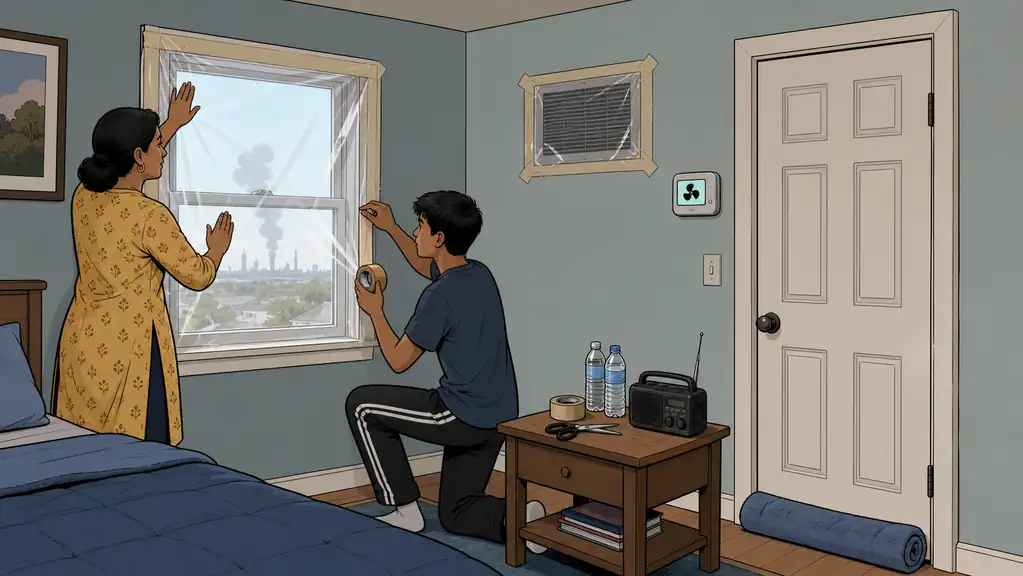
“Shelter in place” sounds like the easiest instruction in preparedness: stay inside, wait it out. That reading is why it fails. When a chemical tanker ruptures on the highway or a plant releases downwind, the threat is the air — and a normal house breathes. Doors, windows, gaps, and the HVAC pull outside air in continuously. Standing in an ordinary room while a plume rolls through is only marginally better than standing in the yard.
Real sheltering in place is an active seal, done fast, against an airborne hazard that will pass. Get it right and it’s the correct call for exactly the threats where evacuating would drive you into the cloud.
Why this sits at the very top of the hierarchy
The Rule of 3s starts with three minutes without oxygen — and a chemical or smoke event is an oxygen-quality emergency, which is why it outranks nearly everything. But it also has a feature that fallout doesn’t: most releases are short. A chemical plume passes in minutes to a few hours; the wind moves it along. That changes the whole strategy. You’re not digging in for a week behind mass — you’re holding your breath, as a building, until the air outside is clean again.
A chemical plume is a wave, not a siege. You don’t out-supply it — you seal the hull, let it pass overhead, and then you leave.
Pick the room before the day
You can’t shop for a shelter room during a release. Choose it now: an interior room, high in the house if you can (many hazardous gases are heavier than air and pool low and the ones lighter than air just go up harmlessly anyway), with the fewest windows and doors to seal. A room with a water supply, toilet, and a way to hear emergency broadcasts is better still.
Seal it — HVAC first
When the alert comes, the moves are simple and the order matters:
- Get everyone inside and shut every door and window.
- Kill the HVAC — furnace, AC, and any fan or vent that moves outside air in. This is the biggest single leak, and people forget it.
- Seal the room. Close interior doors, then tape plastic sheeting over windows, vents, and outlets, and stuff wet towels along the base of the door. Have the plastic, tape, and scissors staged in the room — you seal in the time the plume takes to arrive, not the time it takes to run to the garage.
- Then wait, and listen. A battery radio or your phone is how you learn the plume has passed.
The signal you’re actually waiting for is “leave now”
Here’s what separates this from a fallout shelter, and from the threats that simply force you out: sheltering in place against a chemical release is usually temporary by design. You seal, the plume passes, and then officials often tell you to ventilate and evacuate — because contamination may have settled and the sealed room’s air is now stale. Fallout you wait out for days behind mass; a chemical plume you seal against for an hour and then leave. Knowing which one you’re in is the whole decision, and it’s a call to make per threat, on a calm day.
What a shelter-in-place kit is not
The dangerous gap: a dust mask or an N95 is for particulates. It does little to nothing against gases and vapors — the exact thing in most chemical releases. Real respiratory protection against gas means a proper respirator with the correct cartridge, fitted and trained on. Don’t let a box of paper masks convince you you’re covered. For most people, the seal is the protection — not the mask.
Bottom Line
- Sheltering in place is a seal, not a synonym for “inside.” A normal room breathes the plume right in.
- Choose the room now — interior, high, fewest openings — and stage the plastic, tape, and a radio in it.
- HVAC off first. It’s the largest way outside air gets in; everything else is secondary.
- Seal for the pass, then follow the “evacuate” signal. Unlike fallout, this is usually short — and often ends with leaving, not staying.
Decide shelter-or-evacuate for each airborne threat in advance and keep it on the plan — Threat Planning holds the call, and the route, attached to the threat it answers.