


Ask most people about losing heat in winter and you’ll hear a version of “I’ve got a gas furnace, I’m fine.” It’s a comforting answer and a dangerous one, because a modern furnace is an electric appliance that happens to burn gas. No power means no blower, no ignition, no thermostat — no heat. The gas line being intact buys you nothing.
That matters more than almost any other prep, because of where shelter sits in the hierarchy of survival: three minutes without oxygen, three hours without proper shelter or heat, three days without water. Heat isn’t a comfort item. In a cold-climate grid-down, it’s on the clock right behind breathing.
The furnace is a single point of failure
Whole-house central heat is efficient and it is fragile — one utility, one blower motor, and it warms every cubic foot of the house whether you’re in the room or not. The instant the grid drops, you’ve lost the entire system at once. So the first move in a winter outage isn’t to reheat the house. It’s to stop trying to.
Heating 2,000 square feet you’re not standing in is how you burn a week of fuel in two days. Heat the person, then the room — the house can stay cold.
Heat the person, then the room, then the house
Work outward from your own body, spending fuel only when the cheaper layer runs out:
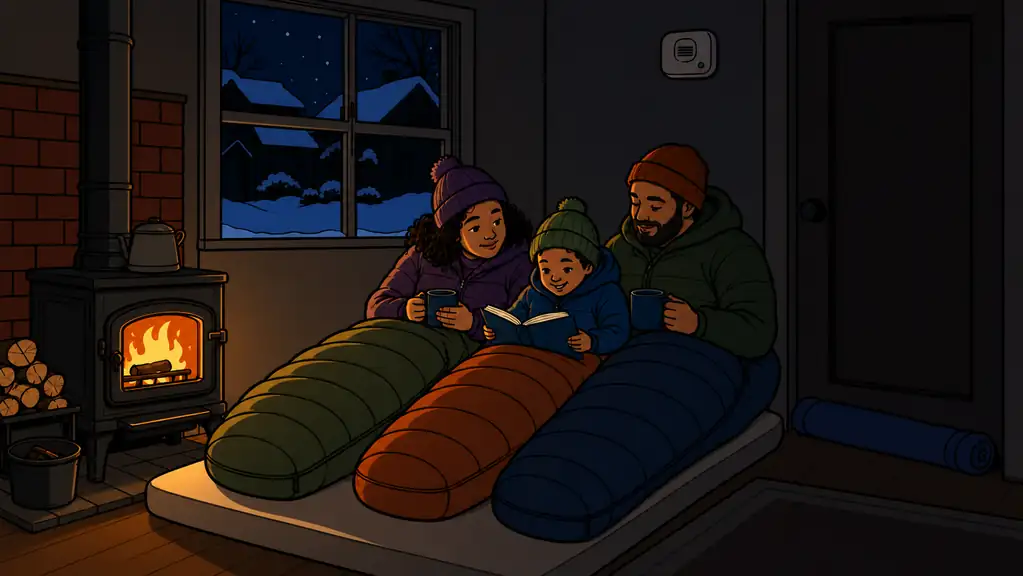
- The person. Insulation you wear costs zero fuel. Layers, a hat, a real cold-rated sleeping bag. A family in bags on a mattress can ride out a night no furnace could keep up with.
- The room. Close off one small interior room and heat only that. Smaller volume, fewer exterior walls, less air to keep warm — a space heater or small wood stove that couldn’t dent the house will hold one room comfortably.
- The house. Last resort, biggest fuel bill, and often not achievable off-grid at all. Stop reaching for it first.
Wood is fuel you can actually measure
A wood or multi-fuel stove is the backbone of most off-grid heat plans because wood is storable, gridless, and quantifiable. A cord isn’t a vague pile — it’s a known amount of energy, and the species decides how much:
- Dense hardwoods — white oak at ~29 million BTU per cord, osage-orange at ~33 — are the high-value fuel. Slow, hot, long burns.
- Softwoods — most pines and firs around 15–16 million BTU per cord — burn faster and lighter for the same volume. Not useless; just less per cord.
- The firewood reference lists every common species, and the honest average sits near 21 million BTU per cord.
Two things the BTU number assumes. First: seasoned wood. Green wood can weigh a third more in water, and you burn energy boiling that off instead of heating the room — split and dry it for months before you need it, not the week you do. Second: supply. Usable firewood isn’t plentiful across much of the northern and central U.S. — identify and secure a source before it’s the only thing keeping you warm.
The thing that quietly kills people heating off-grid
Every fuel-burning heater — wood, propane, kerosene, a generator — produces carbon monoxide. It’s colorless, odorless, and it kills people in their sleep every single winter, usually ones who did everything else right and then ran an unvented heater or a generator too close to the house. Two rules, no exceptions: only ever run a heater rated for indoor use indoors, and put a battery carbon-monoxide alarm in any room you heat. The alarm is a $20 prep that outranks another cord of wood.
Bottom Line
- Your furnace is an electric appliance. Grid down, heat gone — plan a backup that needs no wall power.
- Heat the person, then one room. Never try to warm the whole house off-grid; it’s how you burn your fuel in days.
- Buy wood by the BTU, seasoned, from a source you’ve secured. A cord of oak nearly doubles a cord of pine — and green wood heats the outdoors.
- A CO alarm outranks another heater. Only indoor-rated units indoors, ever.
Turn your climate and square footage into an actual fuel number with the Backup Heat planner — so “I’ll burn wood” becomes “I need this many cords.”