


Buying the generator feels like solving the power outage. The box gets carried into the garage, maybe fired up once in the driveway to hear it run, and the problem gets filed under “handled.” Then the grid goes down on a January night, and a family that spent nine hundred dollars on backup power discovers they don’t have the right cord, don’t know which breakers to kill, and can’t tell whether the thing will run the furnace and the freezer at the same time.
Owning a generator and having a working power plan are two different things, and the distance between them is one afternoon. Preppers love to buy equipment for a threat and then never test it against that threat. A generator is the classic example: it sits, unproven, until the emergency becomes the first real test — which is the worst possible time to find the gaps.
Test it like the power is actually out
The test is simple and it’s the whole point: turn your power off on purpose. Flip the main breaker or the disconnect, then run the house off the generator exactly the way you would in a real outage. Not idling in the driveway — actually powering the panel, or the specific circuits and appliances you’re counting on.
That one exercise answers questions you otherwise won’t face until it’s too late:
- Does it even start, after sitting since last year? Old fuel, a dead starter battery, a fouled plug — you want to find those on a lazy Saturday, not at 2 a.m. in a snowstorm.
- Do you have the right cords, plugs, and adapters, and is there a safe way to connect — an interlock or transfer switch, never a backfeed through a dryer outlet that can kill a lineman.
- What can it actually run at once? Add up the real load. A well pump or fridge compressor surges several times its running watts on startup. Testing tells you whether the furnace, freezer, and a few lights coexist, or whether you’re shedding loads to keep it from stalling.
- How long does a tank last, and therefore how much fuel do you need per day of outage? Runtime per tank is the number that turns “I have a generator” into “I have three days of power.”
A generator you’ve never run under load isn’t a backup plan. It’s an assumption with a pull cord.
Murphy shows up between tests
I once learned the seasonal version of this the hard way. One year a mouse chewed through a wire on my generator in the stretch between my summer test and a winter snowstorm that took out the power — the unit had been fine in July and was dead when it counted. I know of other people that left fuel in the tank and it created enough varnish that clogged the carburetor. That’s the argument for testing just before the season you’ll need it, not once at purchase and never again. The shorter the gap between your last test and the real event, the less time Mr. Murphy has to get in.
Equipment doesn’t stay ready on its own. Fuel goes stale, batteries self-discharge, rodents chew, oil needs changing. A backup that isn’t on a maintenance cadence is slowly rotting toward the state it’ll be in on the night you reach for it.
Make it work without you
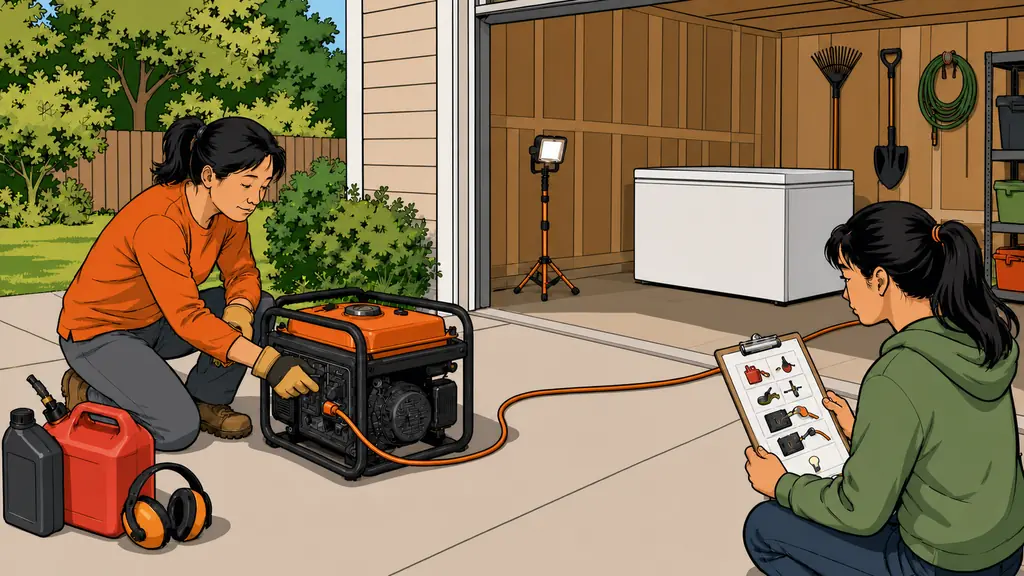
Here’s the part most people skip: the person who knows how to start the generator might not be home. Write it down. A laminated, step-by-step start guide — with pictures — kept right on the unit turns a specialized skill into something anyone in the household can execute in the dark and the cold.
And when you test, take a step back and let someone else run the whole procedure with no help from you. If your spouse or kid can bring the house up on generator power alone, your plan is real. If they can’t, you’ve just found the gap while it’s still cheap to fix.
Bottom Line
- Kill the power and run for real. A blackout drill on your schedule beats a blackout on the grid’s schedule. It’s the only way to know the thing works.
- Learn your numbers. What it starts, what it runs at once, and how long a tank lasts — that’s the difference between owning a generator and knowing what it buys you.
- Test before the season, every season. Fuel, batteries, and rodents don’t respect your last good test. Shrink the gap Murphy gets to work in.
- Write the procedure and hand it off. A pictured start guide on the unit, and a household that can run it without you, is what makes it a plan instead of a skill only you have.
The generator was the easy purchase. The afternoon that proves it works is the actual prep — and almost nobody does it.
Put the outage drill and the pre-season test on a repeating schedule with Reminders so “test the generator” stops being the thing you meant to do.