


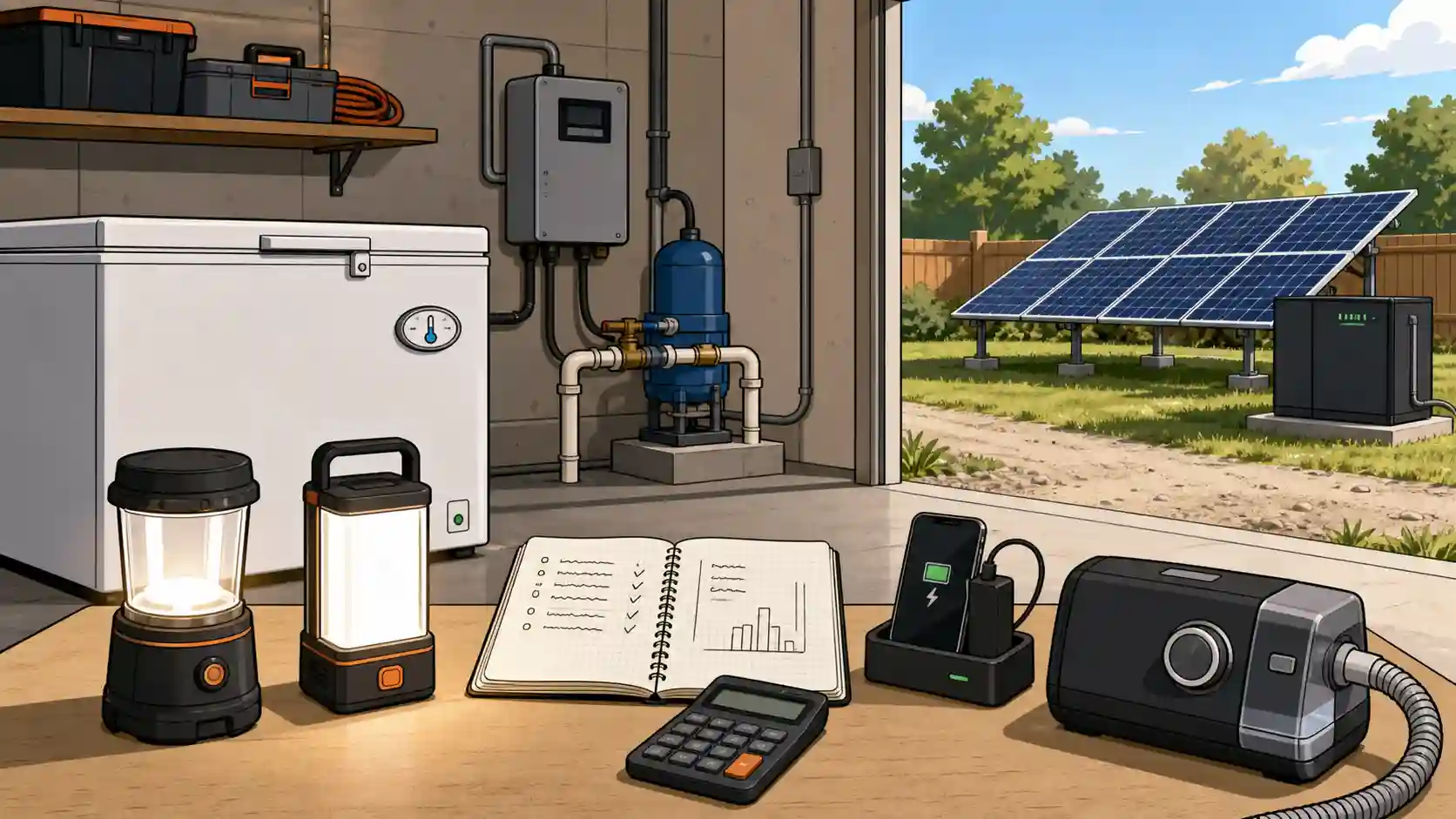
Solar is where preparedness spending goes to feel productive, right alongside the wood stove. A few panels get mounted, an inverter gets wired in, the box gets checked. Then the power goes out and the honest question shows up: will this actually run what I need it to?
Nobody can answer it, because the plan started at the panels. It’s the exact same failure mode as backup heat — the purchase came before the arithmetic, and now there’s no way to know if it’s enough. Solar has an arithmetic answer too, and it starts at the other end of the system.
Start with the loads, not the panels
A solar system exists to run specific things for a specific number of hours. That list of things — measured in watt-hours per day — is the number everything else falls out of. Get it first and the array, the inverter, and the battery bank all size themselves. Skip it and you’ve bought a very expensive guess.
And be deliberate about what goes on the list. The book’s category goal for energy is worth quoting exactly: “Solar system for well, freezers and other critical electrical devices.” Notice what’s on it — a well and freezers. Not mood lighting, not the TV. The loads that earn a place on a backup solar system are the ones protecting the things higher up the hierarchy of needs: your water and your food. Lights are cheap to cover; a freezer full of meat going warm is a real loss.
So the process is:
- List every load you actually intend to power — well pump, chest freezer, a few lights, phone charging, maybe a CPAP. For each: its watts, and the hours per day it runs.
- Multiply and add to get watt-hours per day. That’s your target.
- Respect surge. A well pump or a fridge compressor draws several times its running wattage for the first fraction of a second when the motor starts. The inverter has to survive that spike even though it barely moves the daily watt-hour total. Size the inverter for the surge, size the batteries for the watt-hours.
Then the array — and season is the trap
Only now does the roof enter the picture. How many panels you need to refill that daily draw depends on how much sun you actually get, which depends on your latitude, your panel tilt, and — the part people miss — the season.
A system sized around a bright July day will quietly fall short in December, when the sun is low and the days are short. That’s a problem, because December is exactly when a winter storm is most likely to take the grid down in the first place. Size for the season you actually need the power in, not the season that flatters your panel count.
Then the battery bank
The battery bank is what carries you through the night and through the dark, cloudy stretch when the panels underproduce. Its size comes straight out of the same watt-hour number, multiplied by how many days of autonomy you want and padded for the fact that you can’t drain most batteries to zero without wrecking them. Get the loads right and the bank is just arithmetic. Get the loads wrong and no battery is big enough.
Bottom Line
Solar is an engineering problem with an arithmetic answer, and the arithmetic runs in one direction.
- Loads first. List what you’ll run and for how long — protect water and food before comfort — and total the watt-hours per day.
- Array second. Size it to refill that draw in your worst realistic season, not your best.
- Bank third. It covers the dark days, and it falls out of the same number.
Loads → watt-hours → array → bank. In that order, or you’re guessing expensively — and you won’t find out you guessed wrong until the lights are already off.