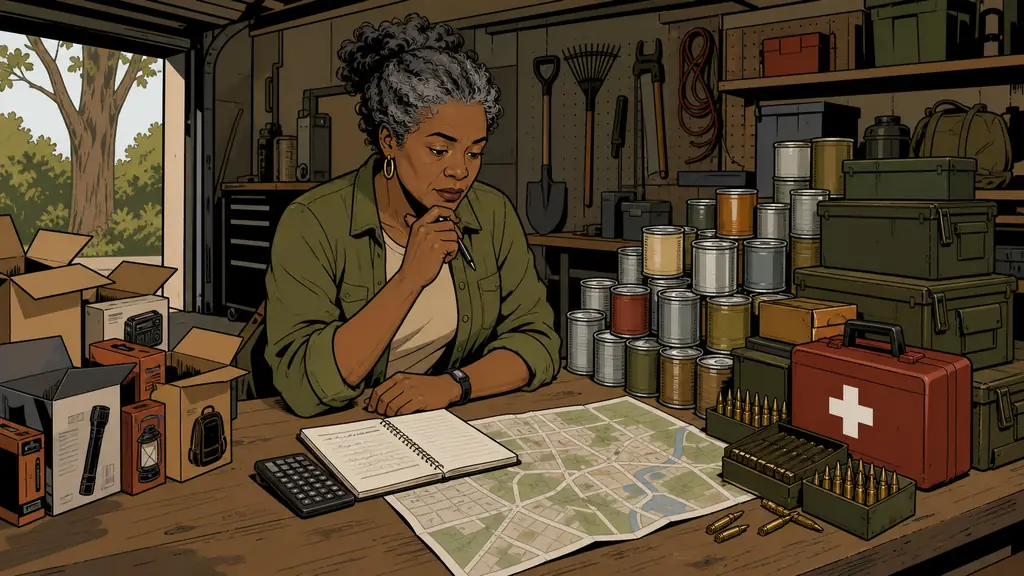
Ask most people how they’re getting prepared and the answer is a list of purchases. Food, water, a gun, a med kit — “beans, bullets, and band-aids.” It feels like progress because you can point at it. You bought a thing; you are now more prepared than you were this morning.
Except you might not be. A pile of supplies is an answer, but you never asked the right question. Prepping done as shopping over-invests in the how — how to store food, how to build a fire from a battery and a gum wrapper — and skips the two questions that actually drive a plan: what are you preparing for, and why. Get those wrong and you can spend years and thousands of dollars being extremely well-prepared for the wrong thing.
This was my story
I know this is true, because it described me. I had been a prepper for a long time and while striving to do it better, I had a realization - I couldn’t answer why I was preparing for one thing over another. I had a vague idea of likelihood, etc. but nothing concrete. I’m an engineer - I live by concrete numbers - so I set out to fix things.
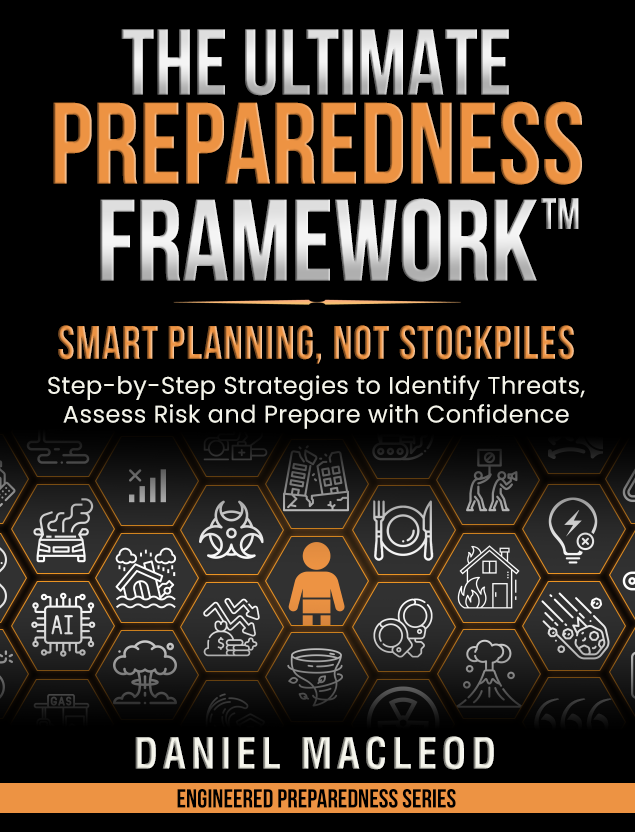
I took the military area study concept and adapted it to preparedness. I published the resulting system in the book The Ultimate Preparedness Framework™ in 2025 and then built this website to make it as easy as possible for other preppers to use the system to make themselves better prepared.
The work happens before the shopping cart
The prepper community is heavily biased toward the how because the how is satisfying and it’s what sells. But the what and the why are more important, and they’re the parts almost everyone skips. They don’t skip them because they’re hard to understand — the process is genuinely simple. They skip them because they’re not easy.
This process isn’t complex — it’s actually very simple. But simple doesn’t mean easy, and most people like it easy.
Two pieces of unglamorous homework come before the first purchase, and they cost nothing but time.
Write down your baseline. List every threat you’re currently preparing for and honestly rate how ready you are for each — a percentage, a 1-to-10, whatever’s real. This is your starting line. Most people have never once written it down, which means they have no idea whether a purchase moved the needle or just moved money.
Build a threat list. Not a pretty one — a thorough one. Every threat that could realistically hit you and your family, from a job loss to a house fire to an asteroid impact. This list is the question your stockpile is supposed to answer. Without it, you’re buying answers at random and hoping one of them matches.
Buying is the easy 10%
Here’s the uncomfortable ratio: the analysis is most of the work, and the buying is almost none of it. Once you know what you’re facing and why it matters where you live, the gear list writes itself — and half of it turns out to be cheaper or different than what you’d have grabbed on instinct. The person who does the analysis first buys less and covers more. The person who shops first buys a wall of one thing and discovers, during the emergency, that it wasn’t the threat they got.
The results you get are directly proportional to the time you put in. Skim it and you’ll improve a little. Actually do the assessment and you’ll find threats you never knew existed — and stop paying for ones that were never coming for you.
This is also why preparedness is measured in threats covered and days of capability, not dollars spent or square feet of shelving. A garage full of gear that all defends against the same unlikely scenario is a worse plan than a modest kit matched to your five most-likely threats.
Bottom Line
- A stockpile is not a plan. It’s an answer to a question you have to write down first: what am I preparing for, and why?
- Do the baseline and the threat list before you buy anything. They cost only time, and time is the input that determines everything downstream.
- The analysis is the work; the shopping is the easy part. People invert this because buying feels like progress. It isn’t, on its own.
- Measure in threats covered, not gear owned. Ten items against your real risks beat a garage full of one thing.
Start with the question, not the cart: rate your threats by likelihood and impact, then let the ranking tell you where the next dollar goes.