


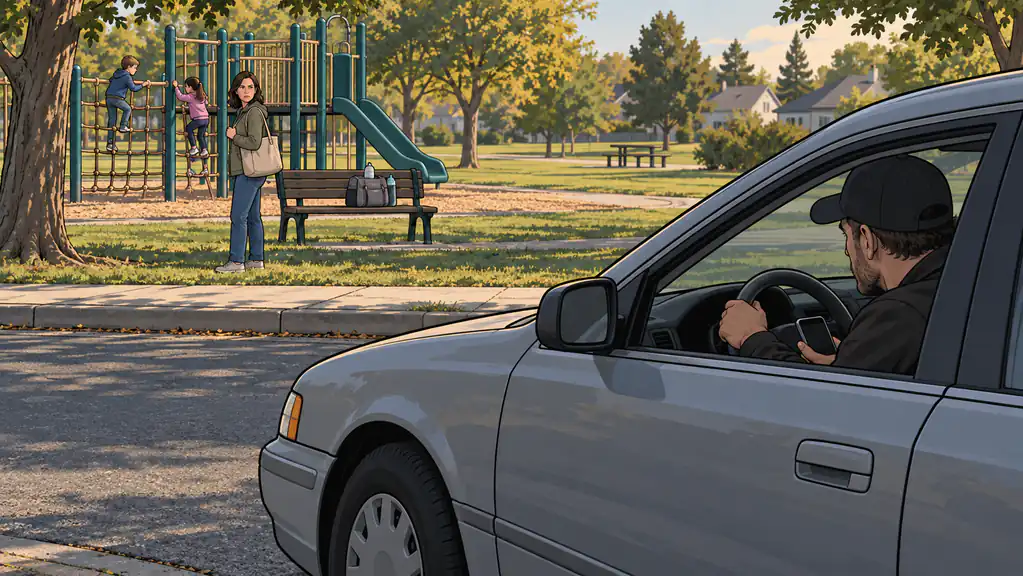
Almost everything a prepper plans for is a force with no opinion of you. A storm doesn’t watch what you do and change its mind. A blackout doesn’t get angry when you cope well. This threat is the exception. It’s a specific person — an ex, a former friend, someone who fixed on you — and they already know your address, your schedule, your people, and your soft spots. You can’t wait them out the way you wait out weather, and you can’t stockpile your way past them. That’s not a hazard to harden against; that’s a person to out-think.
That difference is the whole article. A hazard is static. A person adapts: change your route and they learn the new one, close one account and they try another, and they often get more dangerous exactly when they feel you slipping away. So the tools are different too — a written record, a routine nobody can predict, and a few people who know the situation before anything blows up.
For most households this never happens, which is why it sits low on the odds. But “rare” and “mild” aren’t the same thing. Where this lands, it’s direct and it’s serious — and the people living it need a real plan, not a pat on the shoulder.
The one thing they run on: what they know about you
Strip this threat down and it comes to a single resource — information. What the stalker can do to you is a direct function of what they know about you. Where you’ll be at 5:15. Which gym, which school pickup, which coffee shop on Thursdays. What your passwords are, or were. The physical-danger problem sits downstream of the information problem, every time.
So the core move isn’t a bigger lock. It’s shutting the channels that feed them information. There are only a few:
- Your accounts. Reused passwords, a shared cloud login, an old recovery email they still control, the family phone plan nobody split. An ex who once had access often still has it, or can get it back.
- Your devices and your location. Phones, watches, the car’s built-in tracking, photo location tags, and cheap Bluetooth trackers slipped into a bag or a wheel well. This isn’t paranoia — the Bureau of Justice Statistics found 14 percent of stalking victims in 2019 had their location tracked by an electronic device, and that kind of tracking rose 39 percent between 2016 and 2019.
- What’s public. Your social media and your friends’ social media, public records, data-broker sites that sell your address for a few dollars.
- Your routine. The plain, watchable rhythm of your week.
Technology is where modern stalking lives now, not the bushes outside the window. In that same 2019 survey, 80 percent of stalking victims said technology was involved in some way. Close those channels and you’ve taken away most of their reach before they ever get near your door.
The record is the thing that turns fear into leverage
Here’s the part people skip because it feels too small to matter. Because you’re dealing with a person inside a legal and social system, a written record of what they’ve done is the single most useful tool you have. It’s what a protective order is built on. It’s what moves a police report from “she said, he said” to a documented pattern.
A log entry is one line: date, time, what happened, who saw it. Thirty seconds. Screenshot the message before it’s deleted. Save the call log. Do it every single time — especially the times that feel too minor to bother with, because the minor ones strung together are the pattern, and the pattern is the case. A gap in the log becomes a gap in the case later.
And store it where they can’t reach it. A log that lives only on the phone the stalker can unlock is not evidence — it’s a liability. Keep it encrypted, off that device, and somewhere outside the home: a trusted person’s house, or a private encrypted vault. The value compounds. Six months of consistent entries is worth far more than a frantic reconstruction after something happens.
The dangerous moment is when they feel you leaving
This is the fact that changes your timing, so plan around it. The most dangerous window is not a random Tuesday — it’s the moment the person senses they’re losing control or access. Department of Justice research on intimate-partner violence finds the risk of severe and lethal violence is highest around the time a victim separates from an abuser. Serving a protective order, moving out, going no-contact: these are the flashpoints, not the calm before them.
That doesn’t mean don’t leave. It means don’t leave casually. The exit gets the most planning, the most backup, and the tightest information control — not the least.
A worked example
Say you’ve decided to end contact with a controlling ex who has a key to your place and your old iCloud password. Do it in the wrong order and you hand them a roadmap. Do it in the right order and you close the doors first:
- Before you say a word: change every password from a device they’ve never touched, turn on two-factor, kick their login out of your cloud account, and check the phone and car for trackers. Quietly.
- Then set your people up: tell two or three you trust, agree on a check-in time and a code word, pick a place you can go.
- Then start the log if you haven’t, so the record begins before the reaction does.
- Then make the change — the lock swap, the moved-out day, the conversation — timed for when you have support around you, not when you’re alone.
Same actions most people take eventually. The difference is sequence and timing, and that difference is the whole ballgame.
The common mistakes
- Waiting for it to get “bad enough” to document. By then you’ve lost months of record you’ll wish you had.
- Keeping the only copy on the one device they can access. Encrypt it and get it off-device and out of the house.
- Going it alone to avoid drama. Isolation is exactly what the stalker wants; it raises the danger and makes escape harder. Bringing people in early isn’t overreacting — it’s backup.
- Announcing the exit before closing the channels. The information doors come first, then the move.
- Trusting the population average over your own gut. Most households will never see this. If a specific person has fixed on you, you are not the average, and you should plan like it.
Where to get real help
Know these before you need them, so you’re not searching in a crisis:
- National Domestic Violence Hotline — 1-800-799-7233. Free, 24/7, for safety planning.
- WomensLaw.org — how protective and restraining orders work, state by state.
- SPARC (stalkingawareness.org) — stalking-specific guidance.
- The Safety Net project (techsafety.org), from the National Network to End Domestic Violence — step-by-step device and account checklists built for exactly this.
Readiness here isn’t measured in dollars or gear. It’s measured in a solid record, a routine nobody can forecast, closed information channels, and people who know the plan.
Bottom Line
- The threat is a person who adapts, not a force that doesn’t — plan for someone who watches your countermeasures and works around them.
- What they know about you is the weapon — close the channels that feed them: accounts, devices, location, public data, and your predictable routine.
- The written record is your leverage — one line per incident, every time, stored encrypted and off the device they can reach.
- The most dangerous moment is when they feel you leaving — separation is the flashpoint, so time the exit for when you have support, not when you’re alone.
- Don’t do it silently or solo — bring in trusted people and know the hotlines and legal paths before the crisis, because isolation is the whole game to them.
You can’t out-wait a person the way you out-wait a storm. But you can take away the two things they run on — your predictability and your silence — and become the hardest target they know.
Keep your incident log encrypted, private, and off-device with the Digital Binder, so the record is safe from the one person it documents.