


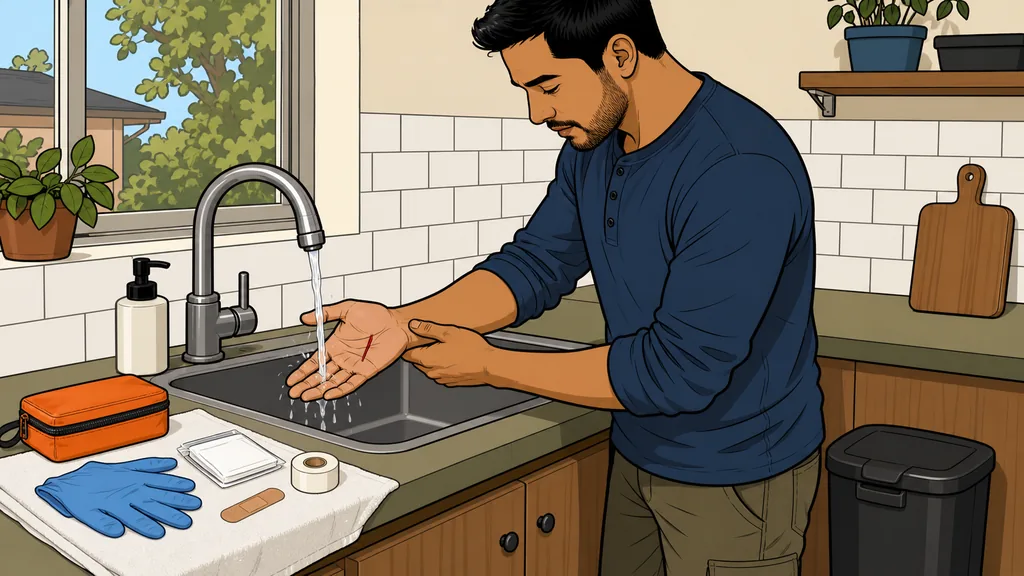
We forget how much of modern safety is chemical. For most of human history a deep cut, a bad tooth, a case of pneumonia, an infected scratch — any of them could kill you, and often did. Antibiotics changed that so completely that we stopped thinking of a minor wound as dangerous at all. It’s a prescription now, a five-minute clinic visit, a non-event.
Take the clinic and the pharmacy out of the picture and the old world comes back. The small cut on the hand becomes a real threat again, because the thing that made it trivial — reliable access to antibiotics and clean care — is exactly what a long emergency removes. This is one of the quieter reasons a grid-down stretch is dangerous: not the dramatic injuries, but the ordinary ones that used to be nothing.
Antibiotics didn’t just treat disease — they changed what “a minor injury” means. Remove them and a scratch is worth respecting again.
Prevention is the lever you actually control
The instinct is to solve this by stockpiling antibiotics. Hold that thought — because the highest-leverage work here isn’t pills at all. It’s not getting the infection in the first place, and unlike a stockpile, that part is fully in your hands and never expires.
Wound care is the real prep:
- Clean it properly. Copious irrigation with clean water is the workhorse of wound care — most wound infections are prevented at the sink, not the pharmacy. This is one more reason your water plan is a medical plan.
- Close it right — or don’t close it at all. Knowing when to leave a wound open is as important as knowing how to protect it; the wrong wound closed traps infection inside. This is a taught skill, not a guess.
- Watch it. Redness spreading, heat, swelling, streaking, fever — the early signs that a wound is turning. Catching it early is the difference between a manageable problem and an emergency you can’t handle.
- Sanitation, again. Clean hands and a clean environment prevent more infections than any drug treats. The sanitation piece is the same fight from the other side.
Do this well and you need the antibiotics far less often — which matters, because the antibiotics are the hard part.
The stockpiling question is genuinely fraught
Here’s where honesty beats confidence. Stockpiling antibiotics for a long emergency is a real strategy that serious people pursue, and it comes with real problems that no article should wave away:
- They expire. A stockpile has a shelf life and a rotation burden like everything else.
- The wrong drug does nothing — or harm. Antibiotics are specific. The right one for a skin infection is the wrong one for a UTI, and guessing wastes a finite supply while the infection advances. Correct use requires knowing which drug, how much, and for how long — clinical decisions, not shopping ones.
- Misuse breeds resistance and can leave you worse off than you started.
The legitimate path is the same one the prescription problem already points to: talk to a clinician. Some will help you build a modest emergency supply with real guidance on when and how to use it. That guidance is the actual value — a bottle of the right antibiotic without the knowledge of how to use it is only half a tool, and the dangerous half.
Bottom Line
- Infection is the old killer antibiotics hid. Remove the pharmacy and ordinary wounds get dangerous again — respect them accordingly.
- Prevention is the part you own. Clean the wound, manage it right, watch for the turn, keep things sanitary. This prevents more infections than any stockpile treats.
- Stockpiling is real but fraught. Antibiotics expire, are drug-specific, and are dangerous to guess with. The knowledge to use them is the scarce part, not the pills.
- Route it through a clinician. The right drug plus real guidance on when and how to use it — that’s the legitimate version of this prep.
Stock real wound-care supplies — irrigation, dressings, and the basics — in your Medical & Hygiene inventory, and treat clean water and sanitation as the front line of infection control that they are.