


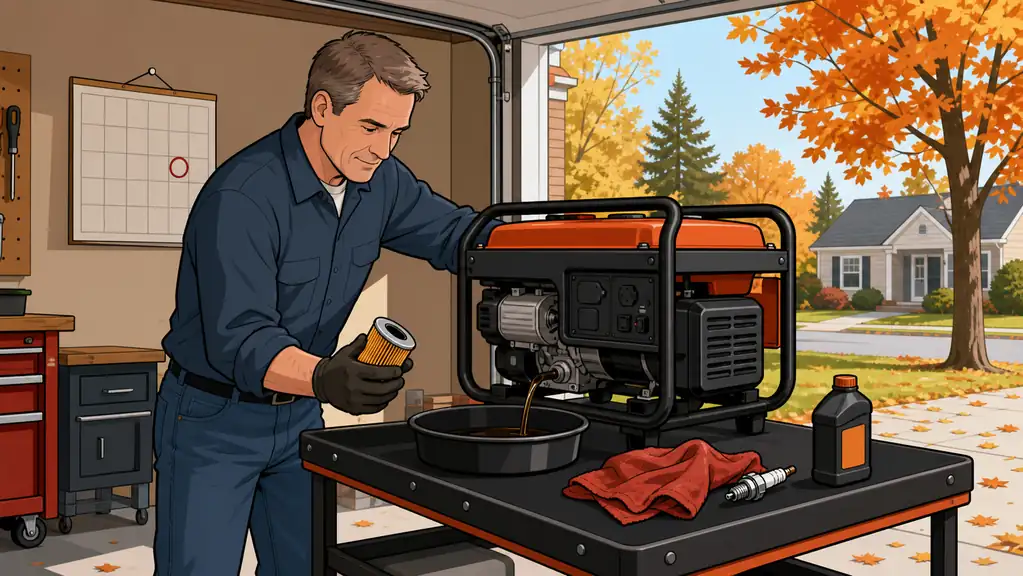
Ask most people what their repair plan is and you’ll hear a list of tools and a vague confidence that they’ll fix things when they break. That’s a repair plan, and it’s the more expensive one. The cheaper plan — by time, by parts, by stress — is the one that stops most of those breaks from happening in the first place. It’s not repair. It’s maintenance, and it’s a different discipline entirely.
The distinction matters because the two happen on opposite days. Maintenance is something you choose to do on a calm afternoon. Repair is something a failure chooses for you — and by Murphy’s Law, it chooses the worst possible moment. Same wrench, same knowledge, wildly different circumstances. One is a scheduled hour; the other is a cold, dark scramble with the clock running.
Entropy sets the rate; you set the response
The second law of thermodynamics is blunt about it: everything you own is wearing out right now, and only outside influence stops it. You are that outside influence. The question isn’t whether your equipment degrades — it’s whether you meet that degradation on your schedule or wait for it to surface on its own.
Maintenance is a repair you make before it’s an emergency. It costs the same skill and cheaper parts, on a day you get to pick.
A belt replaced at the first sign of cracking is a ten-minute job with a two-dollar part. The same belt, snapped, in the field, in January, is a stranded generator and a much longer night. Nothing about the belt changed. The timing changed, and timing is the entire cost difference between maintenance and repair.
Test before the season, not during it
Buying the gear is not the same as knowing it works, and a shelf is where equipment goes to quietly fail. One example is when preppers buy a generator for a power outage and then never actually run it — so they don’t know if they have the right cords, whether it’ll carry their loads, or how to start it under stress. Owning it and being able to use it are two different states.
The fix is testing, and the timing of the test is the trick:
- Test seasonal gear just before its season. Check the generator in late fall, not mid-summer — the shorter the gap between “tested working” and “needed,” the less time entropy has to undo the result. I learned this the hard way when a mouse ate a wire on my generator between when I tested it in summer in a power outage that winter.
- Treat “untested” as “broken.” I’m from the Show-Me state: until the gear has shown you it works against the actual scenario, assume it won’t.
Build the boring cadence
Maintenance only beats repair if it actually happens, and “I’ll get to it” is where good intentions go to rust. What turns intention into reliability is a schedule — a short list of recurring checks tied to a calendar, not a mood:
- Seasonal: test the generator and heat before winter; check the cooling gear before summer; inspect the roof and gutters twice a year.
- By hours of use: small-engine oil, filters, and plugs on the interval the manual specifies, tracked against actual runtime.
- On a fixed clock: rotate fuel and batteries, exercise the well pump, cycle stored water, run a fire drill.
The frequencies don’t have to be perfect. And your timing probably won’t be the same as mine. If you go back through and change almost nothing, your interval is too short; if you’re changing a lot, it’s too long. Start somewhere and adjust. A rough cadence that runs beats a perfect one that lives in your head.
Bottom Line
- Maintenance and repair are the same skill on different days. You pick the day for maintenance; a failure picks the day for repair, and it picks badly.
- Meet entropy on your schedule. The break is coming either way. Choosing when it happens is the cheapest leverage in the whole category.
- Test before the season, and treat untested gear as broken. A generator you’ve never run is a guess, not a plan.
- Put it on a cadence. Seasonal, by-hours, and fixed-clock checks. Adjust the intervals until the changes-per-check feel right.
The Reminders exists for exactly this — turning “I should test that” into a scheduled cadence of checks, drills, and service intervals that actually happen before you need them.