Threats  /  Food Poisoning

Food Poisoning

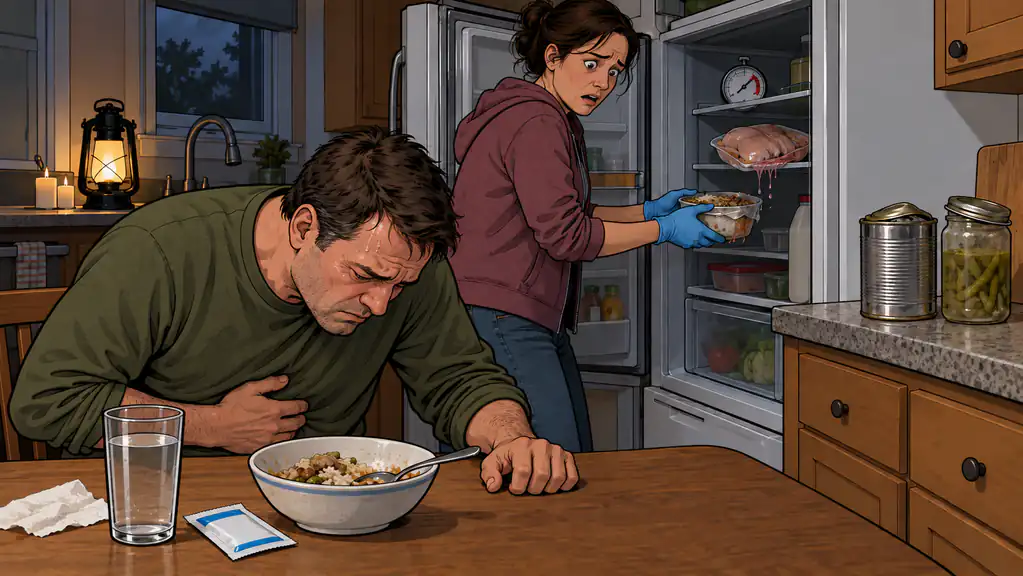
Common and usually mild — but worse when stored food is mishandled. Rotation, dating, and safe-handling basics.
ScopePersonalCauseHealthDriven byPreparednessImpactMinorLikelihoodLikely
Food Poisoning
Why it matters

What Food Poisoning would mean for you

Three numbers decide how important Food Poisoning is to your preparedness planning. Impact and Likelihood are general baselines. Vulnerability depends on how prepared you are for this threat.

ImpactMinor3/9
NegligibleCatastrophic

Usually a miserable day or two that resolves on its own - a low Impact except for the very young, old, or immune-compromised, where it turns serious.

LikelihoodLikely8/9
RareFrequent

Common - most people get it periodically - which is why the Likelihood is high even though the Impact is usually minor.

VulnerabilityNot rated
NegligibleCatastrophic

This number is yours. It measures how hard Food Poisoning would actually hit your household given what you already have in place. Rate it in Threat Planning — then all three multiply into your personal threat rating.

Rate it in Threat Planning →

General baselines — How we rate threats →

Be ready

Preparing for Food Poisoning

Concrete moves that lower your Vulnerability. Add any of them and we'll track it as an action on your threat list.

Add to my threat list
Keep a fridge/freezer thermometer and hold safe temperatures.
Date and rotate stored food; when in doubt, throw it out.
Separate raw meats and wash hands and surfaces.
Keep oral rehydration supplies on hand for the worst of it.
Learn more

Articles on Food Poisoning

Act on it

Tools for Food Poisoning

Make Food Poisoning part of your plan

Add it to your personal threat list, score it for your own household, or pull the real hazard data for your county.