


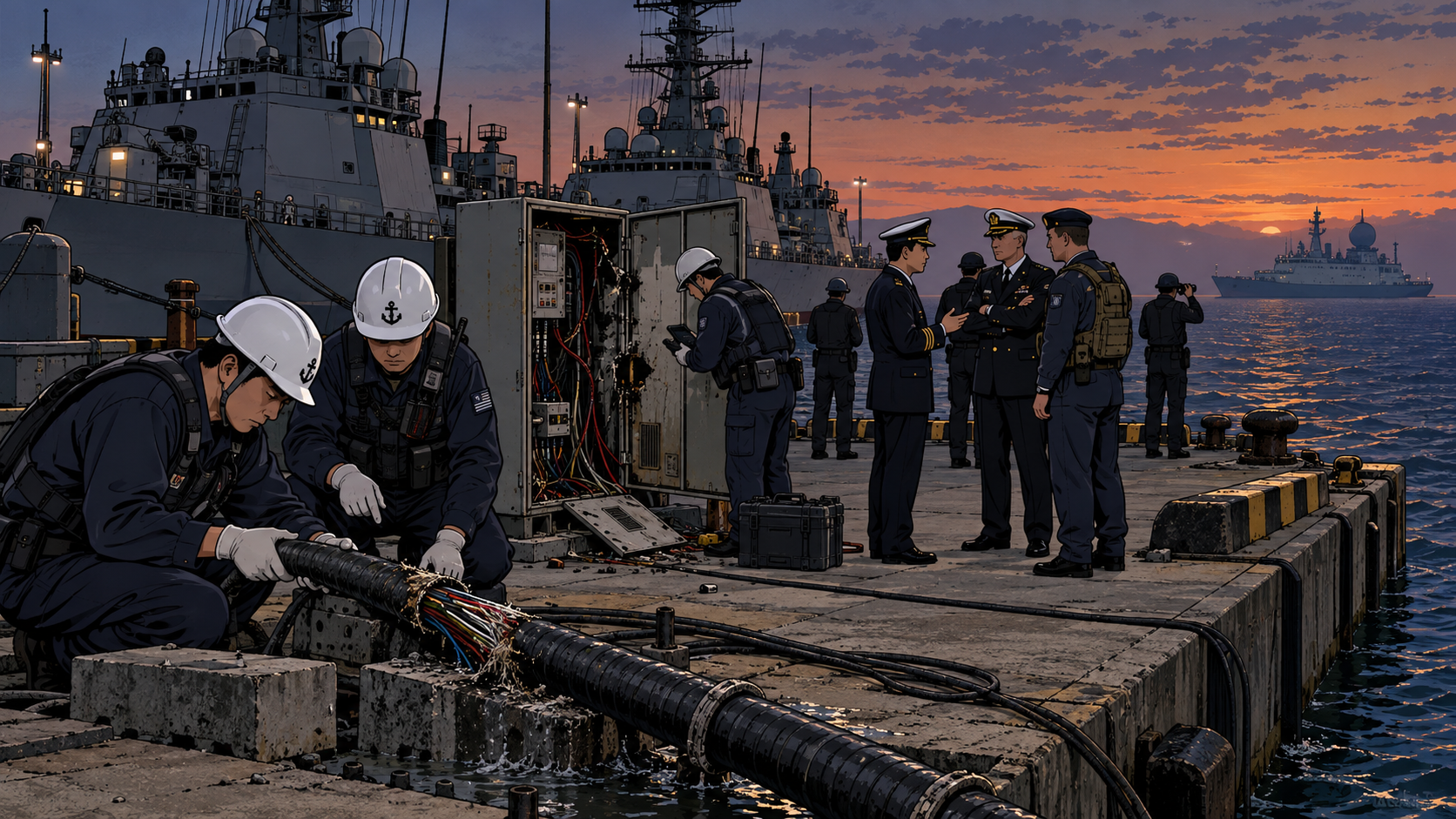
Two stories crossed the wire this week that look unrelated but aren’t. In one, China started building a justification for military action against Japan. In the other, the United States quietly admitted it is now playing China’s own game — unconventional, deniable sabotage. Neither is a shooting-war headline. Both are the kind of groundwork that gets laid before a shooting war, and they both signal the same war which is exactly why they’re worth your attention.
China starts building a case against Japan
A country that intends to strike a neighbor rarely does it cold. It builds a narrative first — a reason the strike was defensive, forced, justified. It’s commonly called casus belli, and it’s the part of this story that matters.
Chinese state and military-affiliated outlets have begun pushing the claim that Japan is seeking to “remilitarize” and is pursuing nuclear weapons, framing new export controls on Japan as a measure aimed at preventing exactly that. The Global Times has amplified the same line.
Here’s why that framing matters. China understands that any attempt to take Taiwan almost certainly pulls in Japan — U.S. bases on Japanese soil, the Senkakus, and the simple geography of the first island chain make Japan a participant whether Tokyo wants to be or not. If Beijing is going to have to deal with Japan anyway, it is far better to deal with it on day one, preemptively, with a story already told to the world about why it was necessary. Accusing Japan of chasing nuclear weapons is the opening paragraph of that story. It doesn’t mean an attack on Japan is coming. It means the rationale for one is being pre-positioned — and rationales get built before plans get executed, not after.
The US quietly starts fighting fire with fire
For years, China has waged what its own strategists call “unrestricted warfare” — sabotage, cyber intrusion, economic coercion, and industrial espionage pursued below the threshold of open war. The U.S. has mostly answered in kind only through the CIA, keeping the military out of that deniable gray zone. That appears to be changing.
According to The Washington Post, the Department of Defense stood up a Technology Support Office (TSO) in April 2026 to covertly sabotage foreign technology programs — an expansion of two smaller DoD sabotage efforts that date to 2023. One former official described it as a “refocus from the highest levels of government” on that kind of activity; another said its purpose is to centralize clandestine sabotage under one roof. Separately, the Pentagon is reported to be building a deep-cover spy program using operatives under Non-Official Cover (NOC) — people posing as businesspeople rather than diplomats. Both efforts are reportedly run through Tom Rakusan, the CIA’s former Deputy Director of Operations.
Read plainly: the U.S. military is building a standing capability to do to China’s technology programs what China has long done to everyone else’s. Strategically that may be overdue. But for a civilian, the signal is the same one the Japan story sends — both sides are now investing in the tools of conflict, not just the diplomacy of avoiding it.
What it means for you
You can’t influence a Technology Support Office or a Global Times editorial. What you can do is read them correctly. Narrative-building against Japan and a new U.S. sabotage command are both pre-conflict indicators — the quiet, structural moves that accumulate in the months and years before a crisis, not the crisis itself. They don’t tell you a war starts next week. They tell you the two largest militaries on earth are preparing for the possibility seriously enough to build the machinery for it, which is a reason to keep your own long-disruption reserves in good order rather than a reason to panic.
Bottom Line
- Watch the narrative, not just the news. China accusing Japan of nuclear ambitions is how a justification for preemptive action gets pre-positioned. The accusation is the tell.
- Japan is in the game whether it wants to be or not. If Beijing has to deal with Japan to take Taiwan, dealing with it first — with a story already told — is the logical move.
- The US is now playing the gray-zone game openly. A military sabotage office and a deep-cover spy program mean Washington is matching China’s unrestricted-warfare playbook instead of leaving it to the CIA.
- These are pre-conflict indicators. None of this is a war order. It’s the groundwork — a reason to keep your reserves steady, not a reason to react.
See how a Pacific war would actually reach you with the War with China threat brief.