


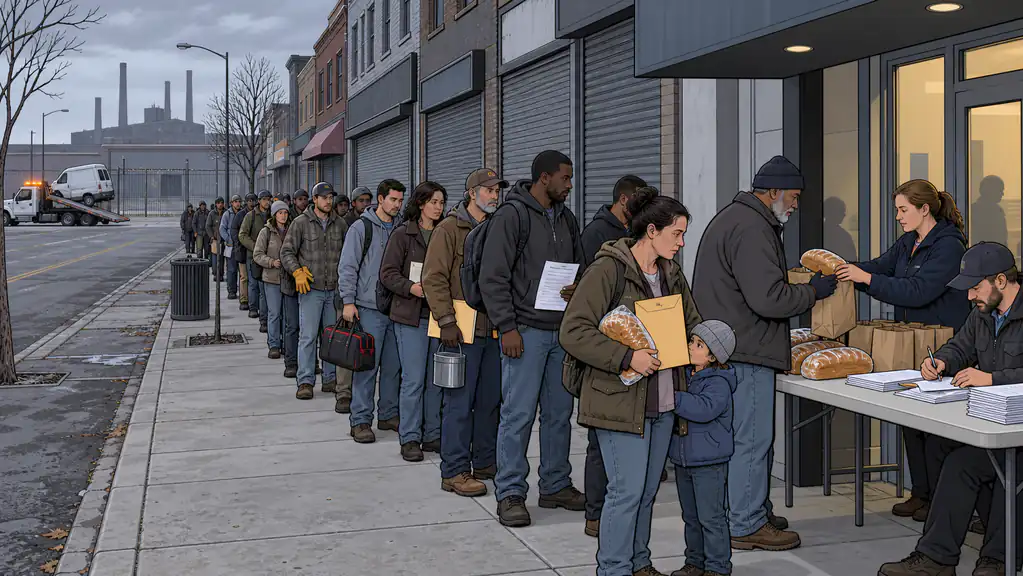
When people think about emergencies, they picture something sudden and physical — a storm, a fire, an outage. An economic depression is none of those things, and that’s exactly why it slips past most people’s preparations. It doesn’t hit in an afternoon. It grinds. Jobs get scarce, hours get cut, prices climb, savings shrink, and it can go on for years. There’s no siren for it, no evacuation route. But for the number of households it touches and how long it lasts, a serious downturn belongs on any honest list of things to prepare for.
The good news: preparing for it uses the same steady habits that make your everyday life stronger. You don’t need special gear. You need margin.
Why you should care
A depression is a broad, grinding downturn — not just a rough month, but a long stretch where the whole economy shrinks. When that happens, it doesn’t pick and choose politely. Layoffs spread across industries. The job you thought was safe may not be. Businesses close. Savings that felt like plenty get spent down waiting for things to turn around.
The reason it earns a spot on the list isn’t drama — it’s breadth and duration. A flood hits some neighborhoods; a depression hits nearly everyone, everywhere, for a long time. It’s the emergency that arrives slowly and overstays.
It’s happened before, and it’ll happen again
You don’t need me to quote exact numbers to know the pattern is real. History has serious economic crashes and depressions scattered all through it — they come around every generation or two, in different forms. In the Great Depression of the 1930s, about one in four American workers was out of a job at the worst of it. Milder recessions come far more often — the US has had over 30 since the 1850s — but the deep, lasting ones land about once a generation. That’s the honest framing: a depression is infrequent but recurring. Not something to lie awake over, but not something to pretend can’t happen either. It’s happened to your grandparents’ generation or theirs, and it will happen again to some future one.
What it actually does to a household
The damage from a downturn is quiet but heavy:
- Income shrinks or stops. Lost job, cut hours, a business that dries up.
- Costs feel higher. Even as you earn less, prices for essentials may keep climbing.
- Savings drain. Months without full income eat through whatever cushion you had.
- Debt becomes a trap. Payments you could handle when working become impossible when you’re not — and that’s how people lose homes and cars.
Put together, a downturn is a long test of one thing: how many months you can keep going when the money coming in drops.
Lessons from my dad
My dad was a child during the Great Depression and he told me stories about that time. He got one pair of shoes per year - just before winter. By spring, he was typically barefoot and stayed that way until the next pair of shoes came. He actually fared better than most because he lived on a farm and they had no debt. Those he knew of in cities had a much harder time than they did, and those that had large debts lost everything.
We like to think that those times were in the past and won’t be repeated. I hope it is true, but we can’t let hope drive our preparations.
What preparedness looks like
This is where preparedness looks a lot like just good, boring financial health — and that’s fine, because boring works.
1. Keep your debt low. Debt is the thing that turns a job loss into a crisis. The fewer required payments you have, the longer you can ride out lean times. Paying down debt now is one of the most powerful preps there is, even though it doesn’t feel like “prepping.”
2. Build a cash reserve. Aim, over time, for enough set-aside money to cover several months of your basic bills — rent or mortgage, food, utilities. This is measured in months of survival, not in a dollar figure. Three months is a strong start; more is better. Keep it somewhere safe and reachable, not tied up where a bad market can shrink it.
3. Build skills and more than one way to earn. A single income is a single point of failure. Skills that people always need — trades, repair, useful hands-on work — and a small side income make you far harder to knock down. If one source dries up, you’re not at zero.
4. Keep a deeper pantry. A well-stocked pantry is money you spent when times were good, waiting to feed you when they’re not. In a downturn, it means fewer trips to the store, insulation from rising prices, and one less bill to worry about in a tight month. It’s a hedge you can eat.
5. Don’t over-stretch on big purchases. Avoid taking on debt — a bigger house, a fancier car — that creates payments you could only make if everything stays perfect. Leave yourself room to absorb a hit.
Bottom Line
- A depression is a slow, broad, long emergency — prepare for it like one, not like a passing storm.
- Low debt is your best defense — it’s what keeps a job loss from becoming a lost home.
- Build a cash reserve measured in months of bills — aim for three, then more.
- Grow your skills and income streams so you’re never depending on a single paycheck.
- Keep a deeper pantry — food bought in good times that carries you through the lean ones.
A depression doesn’t come with a warning siren. Your margin — low debt, cash months, a full pantry — is the only alarm system that helps, and you build it before you need it.
Get out of debt faster using our Debt Payoff Planner and watch the state of the economy using our Economic History Tool.