


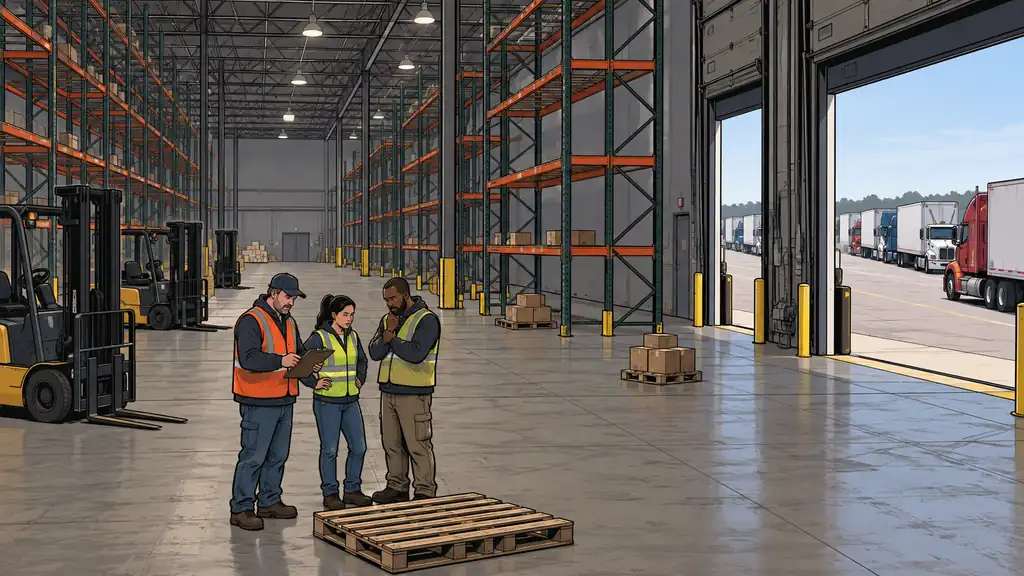
The full shelf looks like proof of a full warehouse behind it. It isn’t. That fullness is a delivery that arrived this morning and will arrive again tomorrow. Modern stores keep only a few days of most items, because the whole system is built to move goods just in time instead of storing them. It’s one of the great engineering feats of our age, and that’s exactly what makes it dangerous — decades of squeezing cost out of it have squeezed the slack out with it.
It runs beautifully under normal conditions and fails in a specific, predictable way under stress. When deliveries fall behind, you don’t see it right away. You see it in weeks three through six, as the thin buffers all the way up the chain drain one after another. Preparing for it isn’t complicated. The system keeps no slack, so you keep it. You be the slack.
Why it’s a moderate impact, not a catastrophe
We rate a national breakdown impact 6, likelihood 2 — disruptive and frustrating, but rideable from your own kitchen, and recurring now and then as the brittle system stalls. The impact is capped at moderate because a prepared household absorbs it. The shelves gap; your own buffer bridges the gap; you barely notice. The likelihood is real but not constant — the just-in-time system stumbles under labor shortages, fuel and transport snarls, clustered bad weather, or a demand shock, and it does so periodically rather than once in a lifetime.
The recent record is thick with examples. The COVID-19 pandemic’s rolling shortages ran across 2020–2022. The 2021 Suez Canal blockage halted an estimated $10 billion a day in trade for six days. And in 2022, a single contaminated-plant shutdown drove the national infant-formula out-of-stock rate to about 70%. A national breakdown is just a bigger version of things that have already happened in your lifetime.
How a lean system actually fails
Understanding why the gaps show up in week three is the whole key to preparing for them instead of panicking through them.
Thin inventory at every step. Stores hold days. Distribution centers hold a bit more, factories a bit more than that — but the whole chain is lean by design. When the inflow drops, each step keeps shipping out of its own small buffer to look normal. That’s why the first week or two feels fine: the buffers are quietly absorbing the shock. By week three they’re draining. By weeks four through six they’re empty, and the gap finally reaches the shelf where you can see it.
The bullwhip. A small wobble in what customers buy turns into a big swing in what stores order, and a bigger swing in what factories are told to make. Panic-buying pours gasoline on this. Shelves clear not only because supply fell but because demand spiked, and the system’s own ordering overshoots in both directions — making the shortage worse and longer than the original problem alone would have.
Substitution collapse. When your usual item is gone, everyone reaches for the alternative at the same moment — so the alternative empties faster than its own supply ever justified. Shortages spread sideways across categories, not just deeper within one. That’s why the felt experience is unpredictability: you can’t tell which specific thing will be missing on any given trip.
Chokepoints. Much of the chain funnels through a few critical points — key ports, rail hubs, a handful of plants making one specialized input, and the trucks that stitch it all together. A jam at one chokepoint spreads far downstream. Fuel is the master dependency: nearly everything moves on diesel, so a fuel disruption is a disruption of everything at once.
The one place a gap really hurts
Most shortages are an annoyance you work around. A gap in flour means you buy rice. A few things are not like that:
- Prescription medications. No substitute, fragile supply, and the worst consequences when short. A gap in flour is inconvenient. A gap in insulin is an emergency. That’s the difference that should drive your priorities.
- Infant formula and diapers, pet food and pet meds, and any medically necessary item. These are the shelves where “come back next week” isn’t an acceptable answer.
- Cascading inputs. A shortage of one industrial ingredient can idle production of many finished goods, so a narrow problem shows up as broad empty shelves — which is exactly how one Michigan plant emptied formula nationwide.
What preparedness looks like
1. Hold the buffer the system deleted — measured in weeks. Build to two to four weeks — deeper is better — of the food, water, and household and hygiene basics you actually use. This one move turns a disruption from a problem into a non-event: you shop from your own shelves and let the store recover. Size it in days of coverage, not dollars. Do the math honestly: a family that goes through a jar of coffee in ten days needs three jars to cover a month, not “some extra.” Count the real days each item buys you and stack them to weeks.
2. Deepen the non-substitutables first. Walk your house and list what only one specific product can do. Medications top it — work with your provider and pharmacy to keep a cushion and refill early instead of at zero, because that’s the category with the least slack and the worst failure. Then formula and diapers, pet needs, and anything medical. Depth in commodity flour is nice; depth in the irreplaceable stuff is the point.
3. Buy steadily — be the opposite of the bullwhip. Build your depth before the disruption, adding a little each shopping trip, so you never join the panic-buying that clears the shelves. Steady accumulation is cheaper — no crisis pricing — calmer, and it doesn’t add to the demand spike that makes the shortage worse for everyone. When a disruption hits, a prepared household should be pulling back from the stores, not piling into them. That’s not just good for you; it’s you refusing to crack the whip.
4. Map your backup sources. Redundancy applies to where you shop, not just what you stock. Know your options past the main grocery store: a second chain, a warehouse club, a farm stand, a local butcher, a direct-from-producer channel. Local and regional food is often less exposed to national chokepoints — a nearby farm doesn’t route through a distant port. Build those relationships before you need them, while they’re easy to build.
Bottom Line
- Just-in-time keeps almost no slack — so shortages surface in weeks three through six as the thin buffers drain, and you have to be the slack.
- Keep two to four weeks of the essentials you actually use, counted in days of coverage, so a disruption never reaches your kitchen.
- Deepen the non-substitutables first — medications, formula, medical and pet needs, where an empty shelf is a real emergency, not an inconvenience.
- Buy steadily and early — panic-buying is part of the shortage, so don’t be the bullwhip; pull back from the stores when everyone else surges.
- Map local and alternate sources — they’re often less exposed to national chokepoints than the big chain is.
The system deleted its own slack to run lean. A breakdown is just that missing buffer coming due — and the prepared household is the one holding it, in the right things, before the shelf ever goes empty.
Build and track your weeks-of-coverage, item by item, with the Food & Water Storage tool, and note your local backup sources alongside it.