


Almost every “get prepared” checklist ends at 72 hours. Three days of water, a flashlight, some granola bars, done. It seems like good advice, but the premise is flawed.
It relies on help
The 72-hour number was arrived at long ago by FEMA based on the average time until help (first responders, etc.) would arrive after a natural disaster or other emergency. Essentially, they want you to be self sufficient until the government can come rescue you… I don’t know about you, but I don’t want to rely on the government to “save” me and my family, and I’m guessing you don’t either.
“The nine most terrifying words in the English language are: I’m from the government and I’m here to help.” — Ronald Reagan, 40th President of the United States
Why the three-day kit caps out
Other than the government issue, the kit has other fundamental flaws. Let’s consider a few scenarios that the kit is designed to address and look at how the kit stacks up in practice:
Hit by tornado
Let’s say your home takes a direct hit from a tornado. The contents of a generic 72-hour kit will sustain you in the immediate and most likely allow tending to basic injuries etc. However, this is as far as the usefulness goes. At this point, you’ve lost nearly everything and are homeless. A typical 72-hour kit doesn’t contain clothes, toiletries, or anything else you’ll need to get through the next few days, let alone the important documents and other things that you’ll need to begin to rebuild.
Evacuate ahead of a hurricane
Let’s say you live near the coast and flee ahead of a large hurricane. In this example, the kit may supply some snacks for the road, but that’s about it. It has little you’ll use while holed up in a hotel somewhere and nothing you’ll need to fix/rebuild once you return home.
Evacuate due to thermonuclear war or asteroid impact
Mass evacuations mean no shelter available, no fuel available and likely no food available. 72-hours of supplies gets you further than most, but not where you need or want to be.
What the three-day kit is good for
It may seem that I don’t think it has value, and that’s not accurate. There are some events that the kit is well suited toward:
- Local Power Outage: The kit provides the things that would be helpful while you wait on the lights to come back on.
- Stranded While Traveling: The kit provides the things that you would need if stranded due to a breakdown or other issue.
Beyond specific events, the kit has one major purpose and that’s as a stepping stone. If you’re just starting out in preparedness, this kit is the perfect first step. Once you have it complete, then you build upon it so that you’re truly prepared for each and every threat that you may face.
My other recommendation for this kit is to change its purpose slightly — into a get home bag. It generally has the same 3-day requirement, but the contents are more about true sustainment, which improves the overall effectiveness in severe situations with minimal downside against the traditional 72-hour kit recommendations.
What the layers actually look like
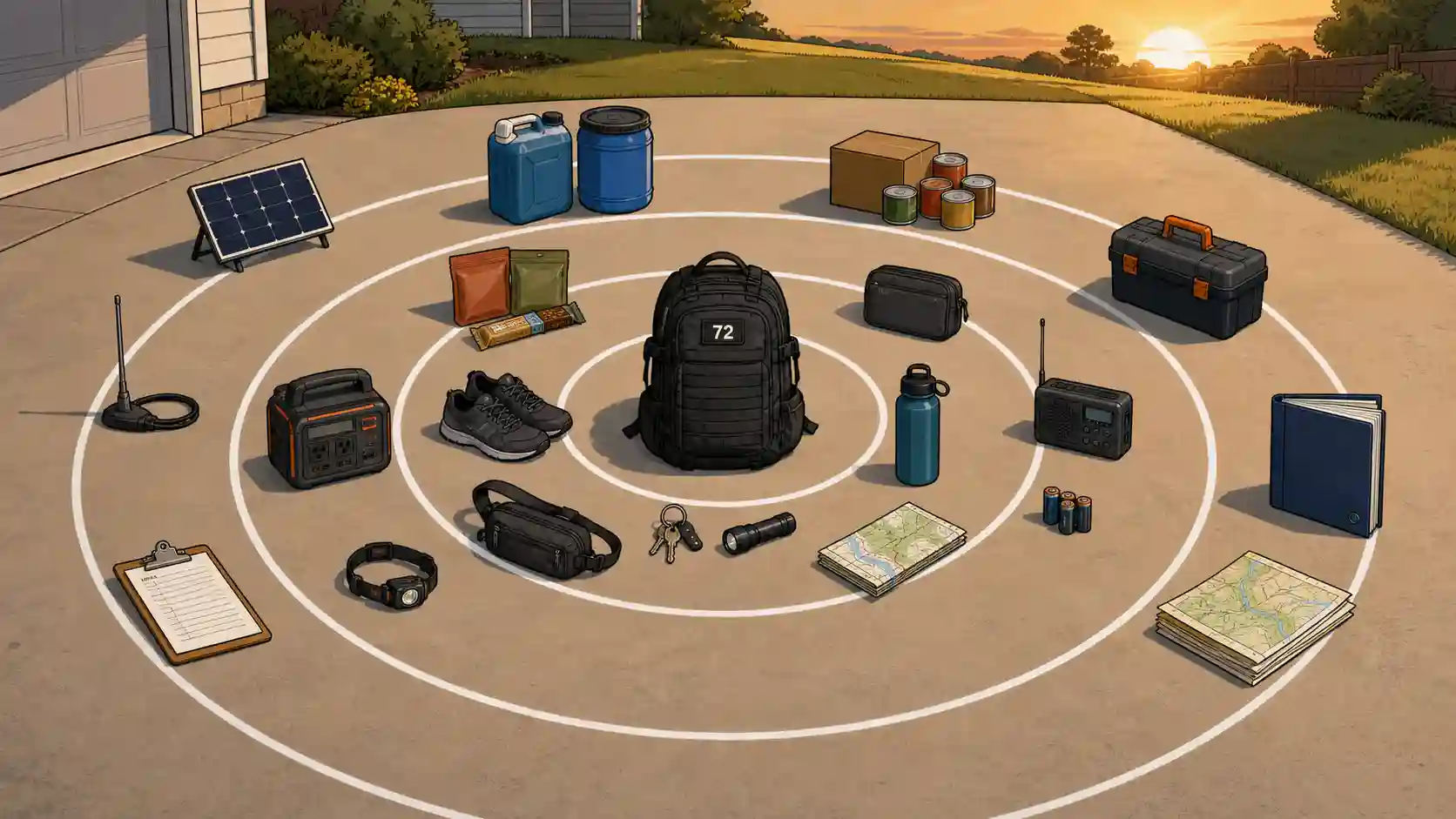
Preparedness generally isn’t solved by one solution. The best way to think of preparedness is of widening rings that build upon one another:
- EDC — what’s on you every day.
- Get-home bag — enough to walk home from work.
- 72-hour bag — one per person, ready to grab.
- Home supplies — the deep larder: water, food, power, sanitation for weeks, not days.
- Skills & plan — the part no bag contains.
Each ring buys you a different kind of time. The bag gets you moving; the home supplies let you stay; the plan keeps everyone making good decisions instead of panicking.
A kit is a noun. Preparedness is a verb. The bag in the closet doesn’t make you ready — knowing what to do with it, and what to do when it runs out, does.
Bottom Line
Build the 72-hour bag first — it’s concrete, achievable, and motivating. But don’t stop there. Use it as the on-ramp to the boring, durable work: get-home bags, water storage to a real target, a week of food from the groceries you already eat, and a way to keep warm and informed when the grid is down.
The bag is the starting line. The race is everything after it.